Book review: Rivers of London/Midnight Riot, Moon over Soho, & Whispers Under Ground, by Ben Aaronovitch

Rivers of London coverLast week, I read an urban fantasy novel, Ben Aaronovitch’s Rivers of London (released in the US as Midnight Riot), about a modern London constable who becomes apprentice to the last sorcerer on the force. The very next day, I read its sequel, Moon over Soho. And the day after that, I read the third in the series, Whispers Under Ground. Three books in three days – they’re that good! And that addictive.


To start, I should get my one criticism of these books out of the way: their plots do not hang together very well, with Rivers of London being the most egregious offender. However, Aaronovitch writes with such exuberance that I can forgive him the wayward plots. What does he do right? That’s a longer list.

Read more

Musical Monday: “Anvil of Crom” and “Theology/Civilization” (Conan the Barbarian), composed by Basil Poledouris

For this week’s song, we’re going back to the ’80s – specifically, to Conan the Barbarian, a movie that tried so, so hard to be a dark, serious fantasy epic. It didn’t quite succeed, but Basil Poledouris’ majestic soundtrack brought it tantalisingly close. Below, I present the iconic main theme, “Anvil of Crom”, and a gentle travelling theme, “Theology/Civilization” – great ambient music for any fantasy RPG. Enjoy!


(By the way, did you know Arnie is due to return in a fourth Conan that retcons both Destroyer and the Jason Momoa reboot? One hopes it’ll be better than Destroyer…)

Read more

Eador: Genesis impressions: Master of Might, Magic, and the Just One More Turn Syndrome

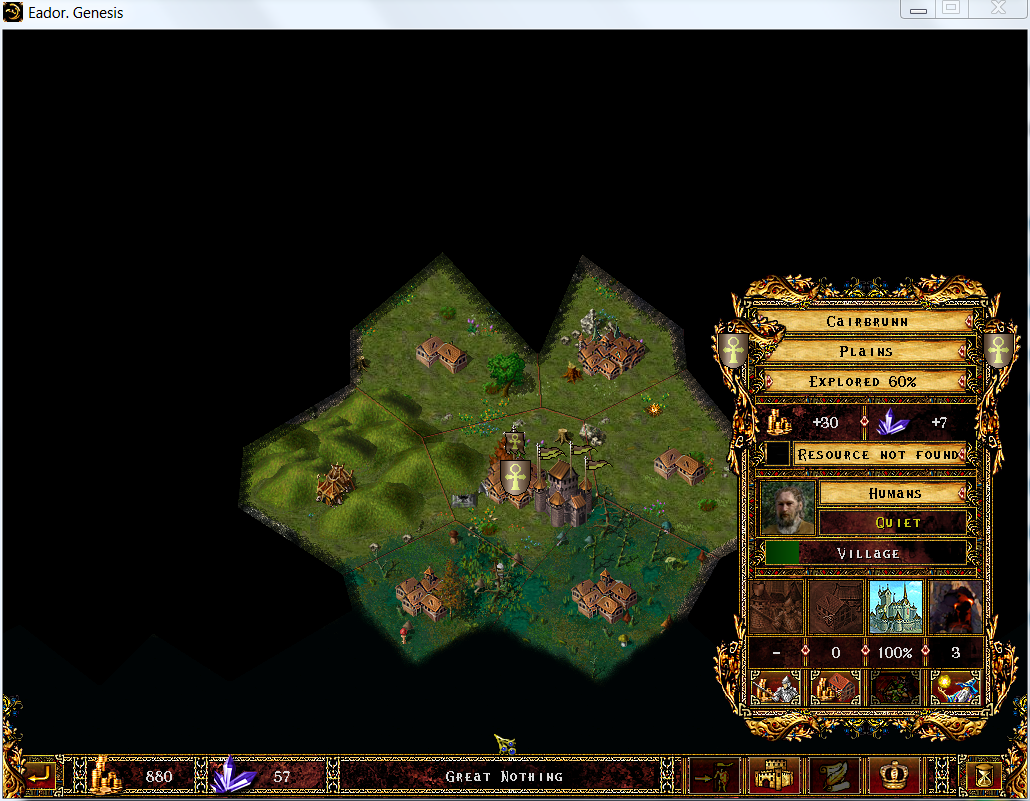
The main map of Eador: Genesis.


Eador: Genesis is a turn-based fantasy strategy game in the vein of Dominions, Heroes of Might and Magic, and Master of Magic. Originally released back in 2009 as the brainchild of one man, Alexey Bokulev, it was only recently translated into English by publisher Snowbird Games. I’ve been playing the game since last week, and while its graphics and production values are… well, what one would expect from an indie strategy game, its gameplay is pure just-one-more-turnium.


The outline of Genesis will be familiar to genre fans. There is a campaign, which I have not tried; all my matches have been on randomly generated maps. Players start with one province and expand across the map, conquering independent provinces, levelling up heroes, and eventually butting heads with each other in tactical battles.  The last one standing wins the game. However, Genesis has several distinctive features:


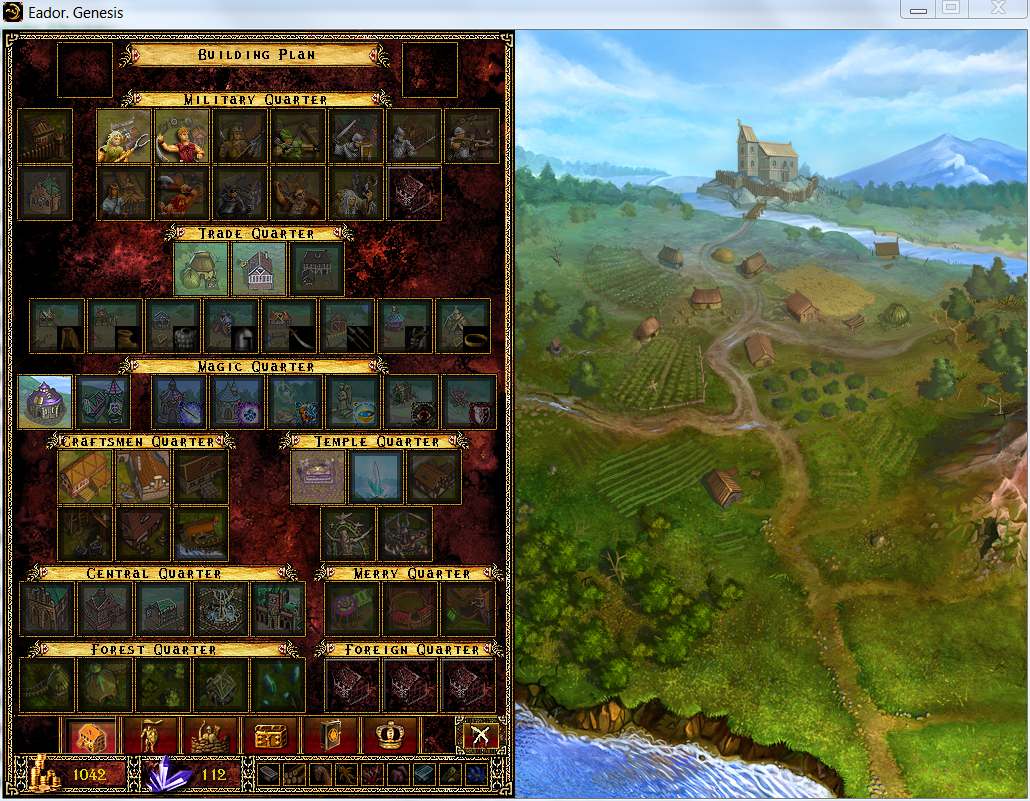
Interesting choices: what to build?


1. Flowing, micromanagement-light gameplay. I think this is half the secret of Genesis’ addictiveness. Most turn-based strategy games, fantasy or otherwise, require constant fiddling from the player – managing multiple cities’ build queues, pushing numerous armies across the map, etc. By contrast, while Genesis offers plenty of choice – look at all the buildings on that construction screen! – at least on small maps, I only have to deal with a handful of moving parts each turn. Build queues? In Genesis, most construction is done in the capital, a la Imperialism – provincial improvements are relatively bare-bones – and in any case, you can only build one building and one province improvement per turn. As for armies, I’ve never had more than two heroes in play.  This means there’s relatively little busywork each turn, and few impediments before it’s time for the next battle.

Read more

New Civilization V expansion announced: Brave New World

Following on from last year’s Gods and Kings, 2K/Firaxis has announced Brave New World, a second expansion for Civilization V. Whereas G&K‘s headline features were religion and espionage, BNW seems to focus on “soft power”: trade, culture, diplomacy, and a new “World Congress” a la the UN in previous Civ games/the Planetary Council in Alpha Centauri. I look forward to finding out more.


If you’d like to read the details, I’ve copied and pasted the press release below, while Rock Paper Shotgun has a full interview/preview up.

Read more

Tomb Raider: More brain & less brawn, please

This entry is part 1 of 2 in the series Tomb Raider

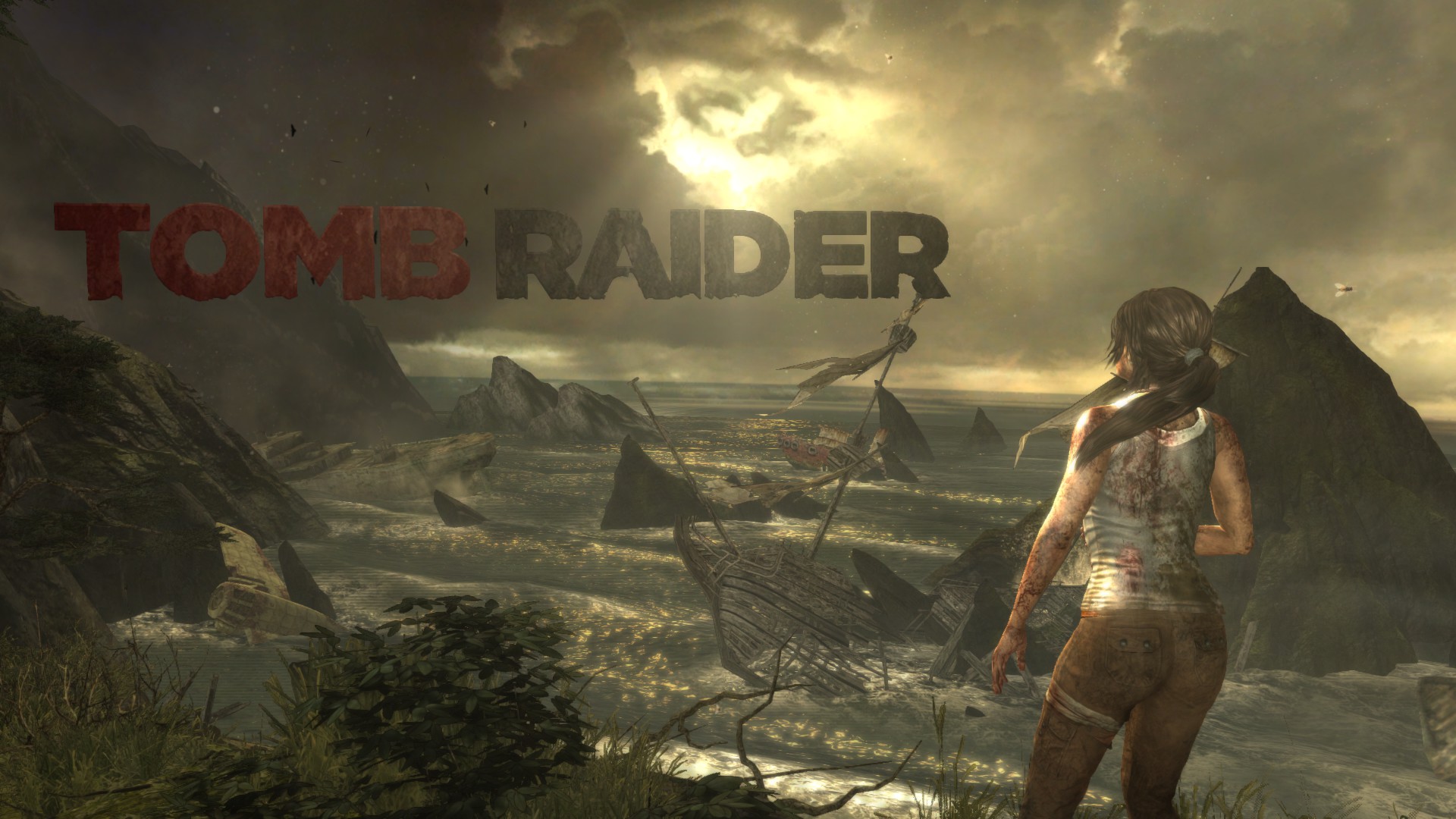
Tomb Raider splash

For the last week, I’ve guided Lara Croft across an island filled with dangers, both natural and two-legged, in Tomb Raider. This is the first game in the series I’ve played (apart from the Guardian of Light spinoff) – after developer Crystal Dynamics promised both lavish AAA excitement and a story with a heart, I hoped for something truly great. Halfway in, I can report this is good, and often exciting – but so far, it’s not great.

Read more

The RPG Battle Themes of Motoi Sakuraba

This week, I’d like to spotlight the music of Motoi Sakuraba — probably best known nowadays as the composer of the Dark Souls soundtrack, but I’ve been a fan of his for years, ever since I heard his work on the Valkyrie Profile games. For now, I’ve chosen just a few tracks: the regular battle themes from Valkyrie Profile (1999) and Valkyrie Profile 2: Silmeria (2006), plus one boss battle theme from Dark Souls (2011). Note how his style has broadened over the years – the overwhelming majority of the original Valkyrie Profile‘s music is in the same upbeat rock style, whereas by Silmeria the music takes on a deeper, more epic quality that finally  blossoms into the very different sound of Dark Souls. Enjoy!

Age of Wonders III Q&A with Lennart Sas

This entry is part 1 of 4 in the series Age of Wonders III

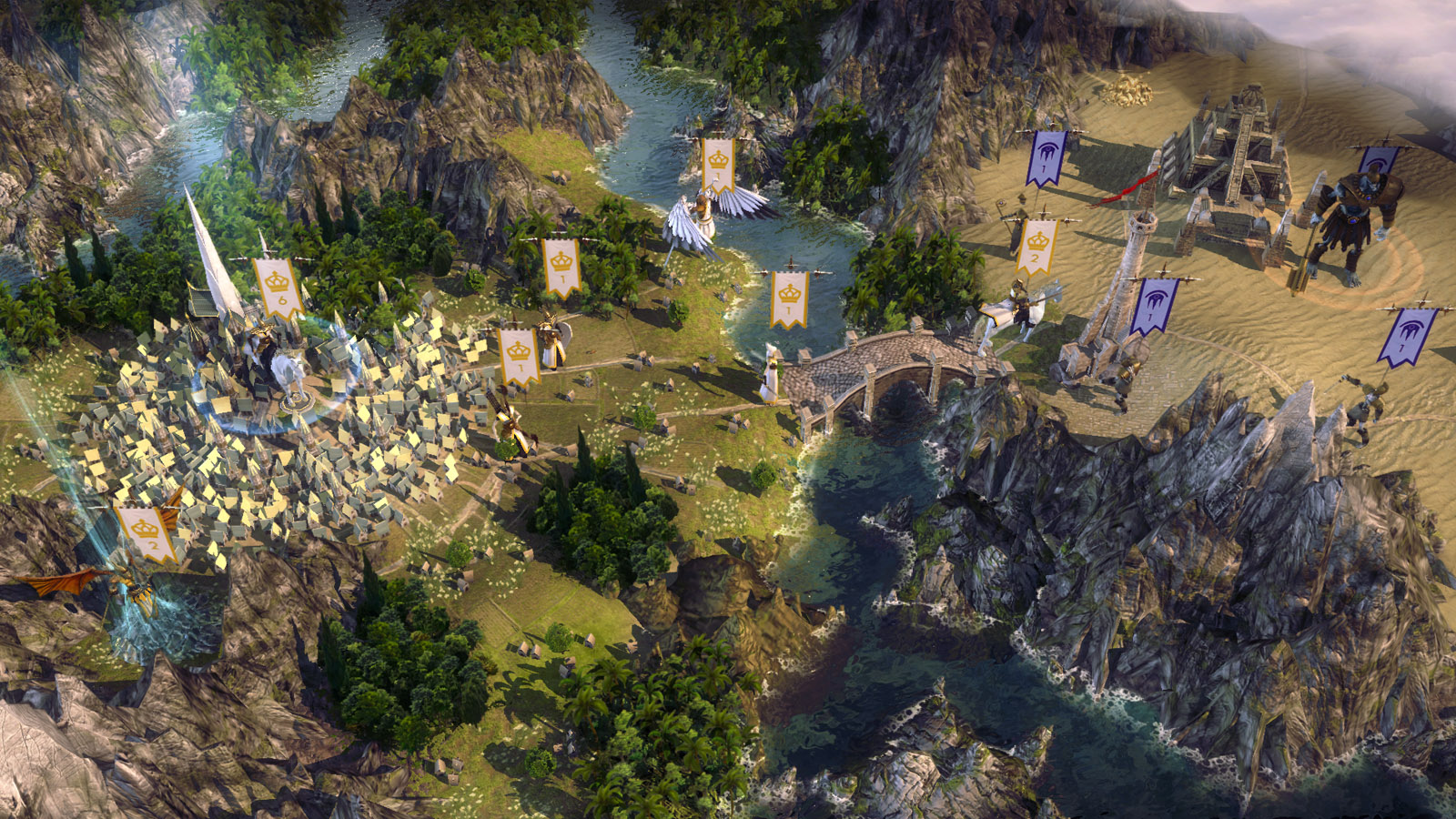
Age_of_Wonders_III_Worldmap_ElfCity


As promised, here’s the Age of Wonders III Q&A with designer Lennart Sas of Triumph Studios!


By way of introduction, Age of Wonders is a high fantasy, turn-based strategy series that has been around since the late 1990s. In AoW, players build up their cities, recruit armies of soldiers and elves, cannons and dragons, and then pit them against rivals in a tactical combat minigame, a la Master of Magic. Fond memories of the earlier games, Triumph’s promise of further improvements, and gorgeous early screenshots all piqued my interest in Age of Wonders III; and it didn’t hurt that the most recent AoW game, Shadow Magic, held up well when I replayed it to prepare for this interview. Sadly I wasn’t able to include every question sent in (I received some separately from the comments to my original post), but I hope this Q&A will address some of what you guys (and I) had in mind. Read on…

Read more

Musical Monday: “Spring Buds” and “Shattered Bamboo” (Romance of the Three Kingdoms XI), composed by Yoshihiro Ike

This week’s songs are from Romance of the Three Kingdoms XI, KOEI’s epic strategy game set in war-torn Ancient China (and the last of its series to be translated into English). The game’s music is situational, so I want to say the first theme, “Spring Buds”, plays when you’re at peace, and that the second, “Shattered Bamboo”, plays when (A) you have a large empire and (B) you’re at war (I don’t recall hearing it when I was an underdog at the start of the game), but I can’t quite be sure! I can say they are as lovely as they are atmospheric, and I hope you enjoy them.


Book review: Castle in the Air, by Diana Wynne Jones

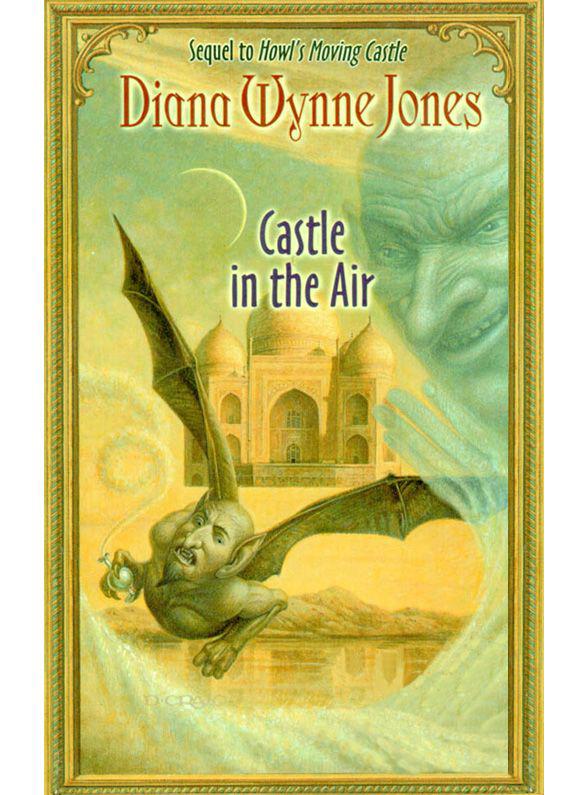
Castle in the Air coverOnce upon a time, in the land of Zanzib, there lived a young carpet merchant named Abdullah. Abdullah’s life was safe but dull, and his only excitement came when he daydreamed himself to be a long-lost prince. Then one day, a man offered to sell him a magic carpet…


Castle in the Air is a 1990 children’s novel by the sadly deceased Diana Wynne Jones. It’s billed as a sequel to the better-known Howl’s Moving Castle, but it stands alone very well – I did fine despite having forgotten pretty much everything about Howl. In fact, Howl fans might be advised to approach this as a separate story – Amazon reader reviews suggest the two books are only tangentially connected.


Connection or no connection, this is a book that does well on its own merits as a light-hearted romp through a fairy-tale world. Castle in the Air is the kind of book where chapter after chapter, the hero escapes from the frying pan only to land in the fire. The surprise, and the fun, lie in discovering how he makes it out each time! It helps that the characters are so vividly drawn. We’ve seen Abdullah’s archetype – the dreamy lad whose wish for adventure comes true – a thousand times before, but Jones breathes life and charm into him all the same. Consider this description of Abdullah’s imaginary backstory:

Read more

“Real lessons from virtual worlds”

That is the title of a short, but really interesting, Financial Times piece on virtual economics (free registration required). For years I’ve wanted to see the mainstream media pick up on the “giant social sciences lab” nature of games such as EVE Online, and now my wish has come true! Well worth a look if you’re interested in the subject.

MOTOKOOOO: Ghost in the Shell: Arise trailer

There is now a trailer for the new Ghost in the Shell prequel, Ghost in the Shell: Arise! Here it is:


Notably, protagonist Motoko Kusanagi has a new design as well as a new voice actress — Maaya Sakamoto, in lieu of the iconic Atsuko Tanaka. Arise will comprise four fifty-minute instalments, the first of which is due out in Japan in June. Sadly, Arise does not seem to be part of the Stand Alone Complex continuity. (It’s been almost nine months, and I still need to write that SAC retrospective!)

Further details around the Web, including at Siliconera and Anime News Network.  Hat tip to sfsignal for alerting me to the trailer.

At the Gates Q&A with Jon Shafer!

At the Gates banner


Civilization V designer Jon Shafer has unveiled his latest project on Kickstarter: At the Gates, a 4X strategy game that casts the player as a barbarian chief out to pick the carcass of the crumbling Roman Empire. The game sets out to fix one of the biggest problems in strategy gaming, the boring middle/late game, and its promised features include:


1. An emphasis on supply: armies will have only a limited capacity to live off the land, making them reliant on supply trains and friendly cities;


2. A dynamic map: resources will deplete over time (placing players under greater and greater pressure as the game goes on); seasons will affect the map as rivers freeze and food stockpiles dwindle during winter;


3. Asymmetric non-player factions: the Romans are still on the map, play by different rules to the barbarians, and won’t give up without a fight.


This all sounded very interesting to me, and Jon was kind enough to sit down for an email interview. Read on:


Read more

Be part of my Age of Wonders III Q&A!

Age of Wonders is a long-running and much beloved fantasy strategy game series, and last week, many of you guys would have seen Triumph Studios’ announcement that it should release Age of Wonders III later this year. I reached out to Triumph to secure an interview, and designer Lennart Sas said we can submit up to five questions! I’m coming up with a few of my own, but it’s been a long time since I played an AoW game (notwithstanding I recently reinstalled the most recent, Shadow Magic), so this is your chance. If you have any good questions in mind, please leave them in the comments below, and I’ll pick the best to send across!

Xenoblade Chronicles impressions: The Force is strong in this game

Xenoblade visual-gameplay-10_large
A glorious sunset in Xenoblade


Of all the magic woven by storytellers, immersion has to be one of the most precious threads. How wonderful it is that we can pick up a book, or play a game, or sit in a cinema, and be transported into another world! The people who write bullet points for video game boxes know this, which is why “immersive” is one of their favourite buzzwords. So is “visceral”, which I find telling. To be immersive, it seems, a work should have us on the edge of our seats: tense, excited, ready to feel its characters’ pain as if it were our own. But there’s also another kind of immersion – think of the proverbial warm soak. An immersive world can be utterly relaxing, an invitation for us to kick back and lose ourselves for an hour or two.  Nearly 20 hours into Xenoblade Chronicles, I can say it exemplifies the latter.


Xenoblade is an RPG for the Nintendo Wii – a platform exclusive, as a matter of fact. It’s a party-based JRPG that bears a striking similarity to 2006’s Final Fantasy XII, in that there are no random encounters and no distinction between an overworld, area maps, and combat screens. Rather, like a Western RPG, monsters are clearly visible – and combat takes place – in the field. Combat is real-time, and the player only controls one party member at a time, chosen before battle starts; the rest of the party is controlled by a generally competent AI. Since the chosen character will auto-attack enemies, the player’s job is to manage aggro, special abilities, and cooldowns. (Not items; there are no potions, stimpacks, antidotes, or the like in this game.) I’ve heard this compared to MMO gameplay, and it’s certainly different from what I’m used to.

Read more

Interested in guest writing for the site?

I started Matchsticks for my Eyes in 2010, with a vision of building a hub for good, thoughtful writing about “worlds of wonder” – games, books, anime, and more. Since then, the site’s come a long way: it may not be IGN, but it does have a pretty solid 6,000+ page views per month, rising to over 8,000 for the last couple of months. And that vision hasn’t changed – we’ve earned our success on the back of some very good content.


Note the “we”; several wonderful guests have graced the site with their writing (on topics as varied as how to lose Crusader Kings II and worldbuilding in Final Fantasy XII). Would you like to join their ranks? If so, leave a comment, or drop me a query via email or the contact form, with your idea plus a link to where I can find samples of your writing. :D Unfortunately, I can’t pay for guest posts – those Amazon ads don’t even cover the cost of hosting, let alone paying for all those books and games – but I would be delighted to provide a link back to your website (if any).


Beneath the cut, I’ve listed a few possible topics – but these are merely suggestions! If you think it’s relevant, I’d like to hear about it. :)

Read more

Kickstarter campaign opens for a Starbase Orion Android/Mac/PC port

Following up on a news item I posted last year, Chimera Software has launched its Kickstarter campaign for an Android/Mac/PC port of Starbase Orion. SO is a 4X space strategy title that – if the trailer is any indication – owes a clear debt to Master of Orion, and based on what I’ve heard about its current, iOS incarnation, I’m quite excited by the prospect of an Android version.

Chimera is seeking $40,000 for the campaign (it’s presently at $2,695), which closes on 6 March.

Musical Monday: Satorl, the Shimmering Marsh – Night (Xenoblade Chronicles), composed by Manami Kiyota

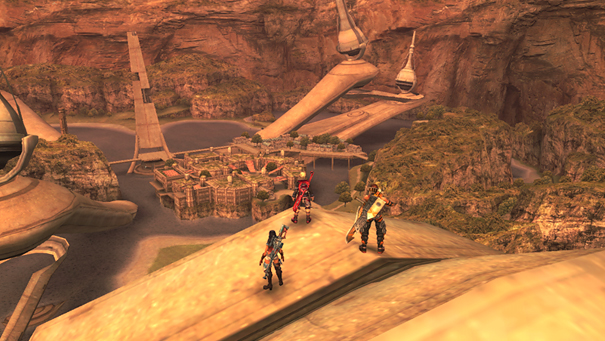
This week’s theme is a piece of ambient music from the Wii’s flagship RPG, Xenoblade Chronicles. Like the area in which it plays (depicted in the concept art below), it has an otherworldly loveliness that actually made me halt what I was doing in the game, sit back, and drink in the experience for a couple of minutes. Enjoy!


Musical Wednesday: Big Iron (Fallout: New Vegas), by Marty Robbins

And we’re back! This week’s song is Marty Robbins’ 1959 country ballad “Big Iron”, featured in Fallout: New Vegas. Including it in the game was an inspired choice! Not only does the song help establish the game’s pseudo-Western atmosphere, but its lyrics — about a gunslinger who rides into town with a “big iron on his hip” — could easily have been about your exploits as an RPG hero. Enjoy!


Fallout: New Vegas: a post-nuclear Western (?)

This entry is part 1 of 1 in the series Fallout: New Vegas
Howdy Pardner
Howdy Pardner


(With apologies to every writer, director, and star of the Wild West)


EXT. THE MOJAVE DESERT


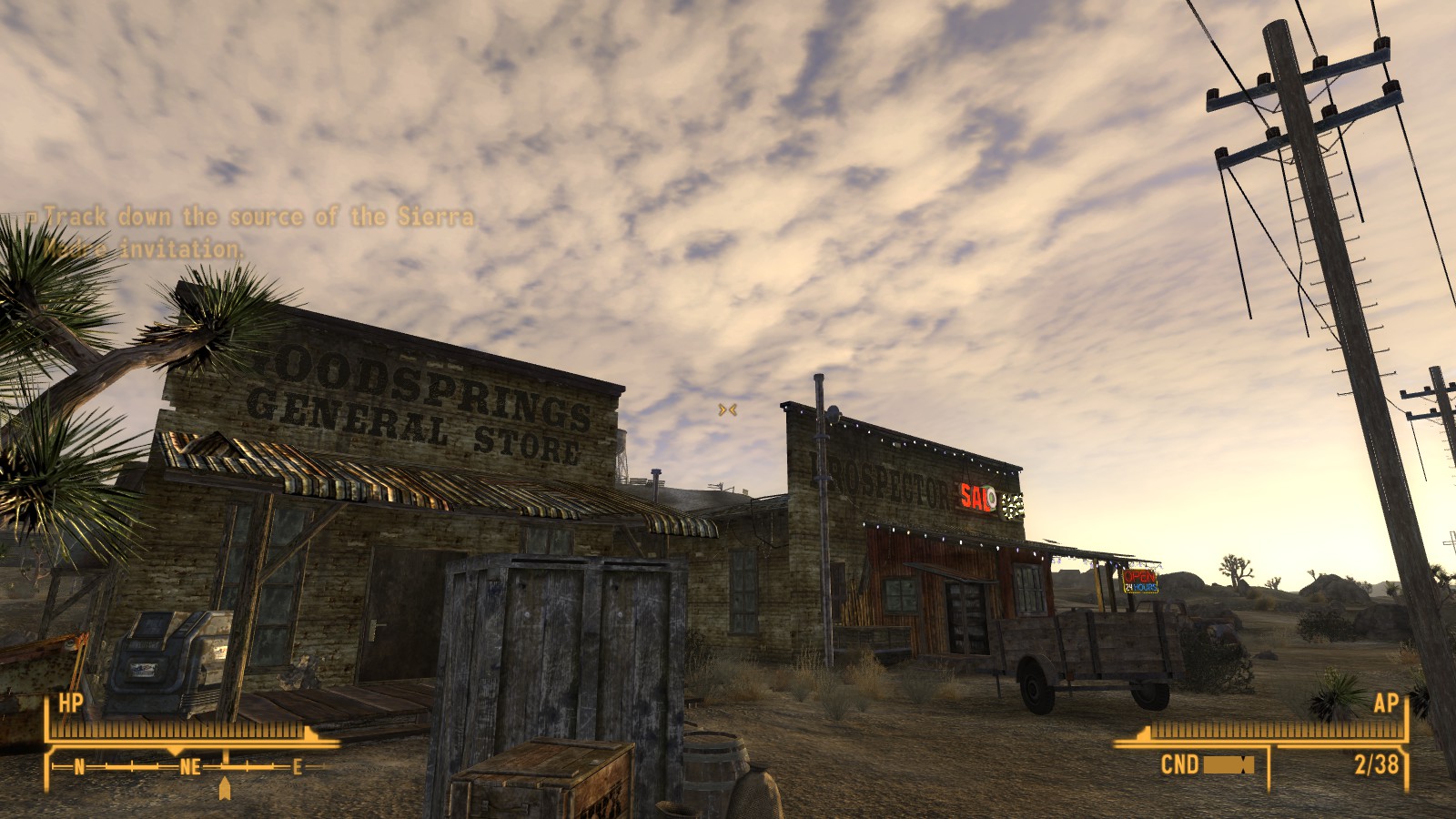
The one-horse town of Goodsprings bakes, silent, in the Nevada heat. One after the other, we see several POWDER GANG BANDITS approach, cradling baseball bats and crude firearms. The Powder Gangers are in high spirits, looking forward to the plunder of the town.


POWDER GANGER #1: Pardner, I do reckon that there town be as easy as liquor flowing at the saloon.


POWDER GANGER #2: Yee-haw!


The Powder Gangers laugh, twirl their moustaches. Suddenly, they hear a yell.


An armoured figure – not one of the townspeople, but our hero, THE COURIER – charges out from between two houses. The Courier winds back his arm and for a moment, time seems to freeze. When it flows again, something red and fizzing has landed at the Powder Gangers’ feet.


POWDER GANGER #1: … Is that… dynamite?


FADE TO WHITE.


I’m ten hours into Fallout: New Vegas, the most unique-feeling entry in the venerable Fallout line of RPGs. Its predecessors (#1 and #3 in particular) revelled in their post-apocalyptic setting: their mohawked raiders could have come straight out of a Mad Max movie, and their civilisation was a precarious, hardscrabble thing – ersatz Bartertowns scattered around the wastes, each surviving as best as it could.

Read more

Choose your own adventure IN SPAAACE: The Fleet

The Fleet is a CYOA-esque piece of interactive  fiction from indie outfit Choice of Games (I wrote about Choice of Broadsides, one of their earlier releases, last week). The Fleet trades in Broadsides’ sailing ships for space cruisers, and costs money ($3) whereas Broadsides was free, but in mechanical terms, the two are very similar. Both take about 30-60 minutes to play through, and both are about making choices that play to the main character’s strengths. (For instance, attempting fancy manoeuvres in Broadsides will lead to disaster if the player character has a low Sailing stat.)


Fleet’s greatest failing is that it lacks Broadsides’ charm – Fleet’s setting isn’t just  space opera, it’s stock standard space opera. It will contain nothing new to anyone who’s read or watched much science fiction. Still, its plot – dealing with the trials and tribulations of a refugee fleet fighting to reclaim its homeworld – is serviceable, and I was thoroughly satisfied with the ending I achieved: I finished as a true statesman, someone who’d led his people – and the galaxy – to a better tomorrow. There are other endings out there, but I’m reluctant to replay the game to discover them – I don’t want to mar my first ending! Overall, a decent time-killer.


If you’d like more detailed looks at The Fleet, Pocket Tactics and Jay Is Games both have helpful reviews!

All aboard! Ticket to Ride: The Verdict

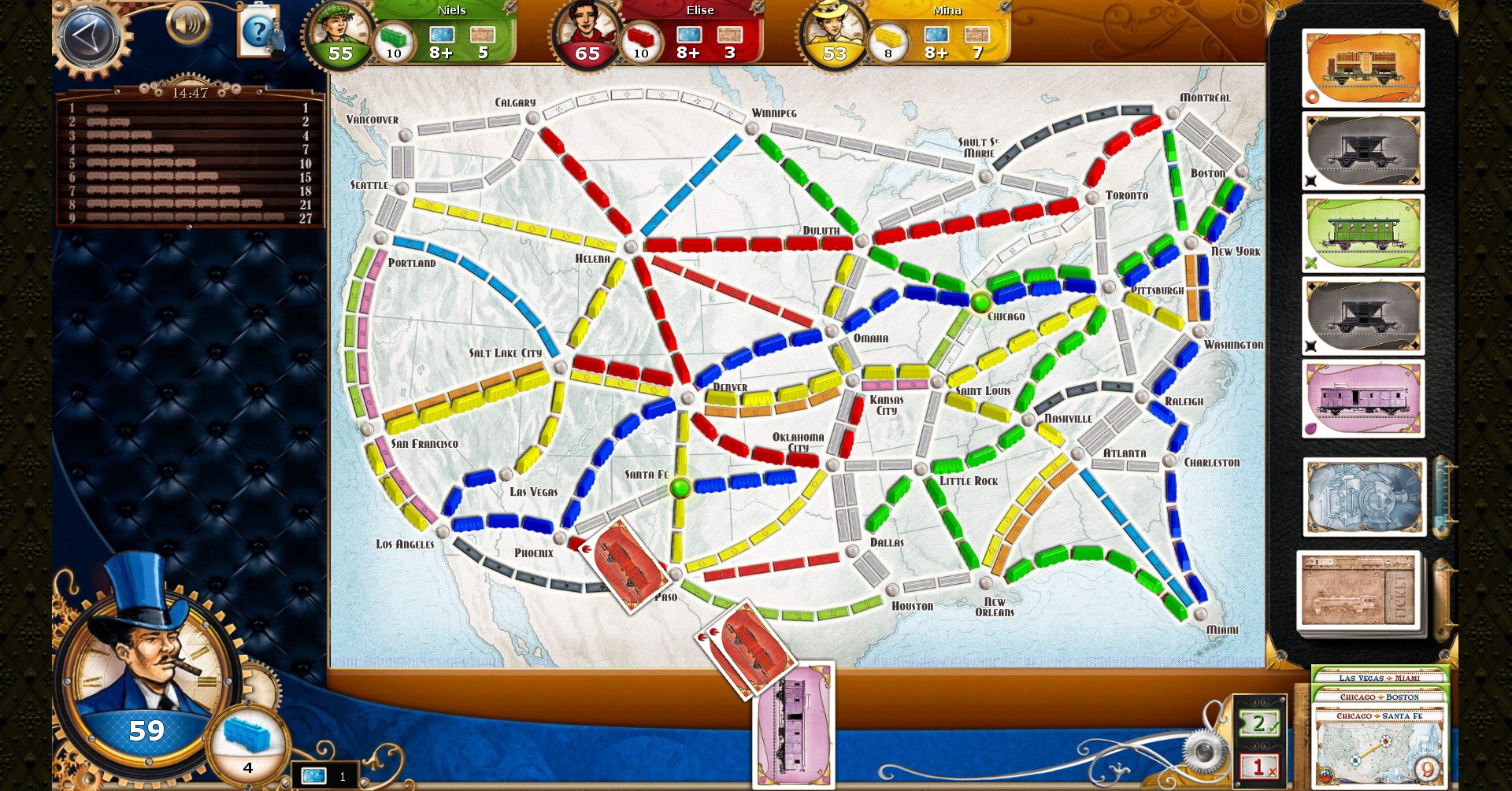
Ticket to Ride PC: clean, colourful, and attractive


The railroad must get through. Chicago must connect to Santa Fe. But I’m almost out of locomotives, my rivals are muscling in, and can I get three cards of the same colour?


Welcome to Ticket to Ride, the PC adaptation of a highly regarded board game (which I have not yet played). In Ticket, players claim train routes by playing cards – six yellow cards to connect Seattle to Helena in the above screenshot, for instance, or five blue cards to connect Atlanta to Miami. Long routes are worth more than short routes, but are correspondingly harder to claim. Furthermore, each player begins with a certain number of “tickets” – routes (Chicago to Santa Fe, in my above example) that reward the player if they are completed, and impose a penalty if they are not. Again, long-haul tickets are worth more – both on the upside and on the downside! – than their short-haul counterparts. Lastly, each route can only be claimed by one player at a time (although the game does provide some duplicate routes). So for example, I couldn’t go Denver -> Santa Fe in the above screenshot, but neither could the other players go Denver -> Omaha, or Chicago -> Pittsburgh, or Pittsburgh -> New York.

Read more

Choose your own seafaring adventure: Choice of Broadsides

“Fire the starboard broadside!” shouts the Captain.


Cannons roar as H.M.S. Courageous attacks the enemy frigate. As one of the junior officers–really, more of an officer in training–you command three guns on Courageous’s main gun deck. The guns of the battery next to yours fire, leaping back against the heavy ropes that prevent them from smashing across the ship. Clouds of white smoke billow about you as you give your gun crew the commands to ready your battery’s cannons: “Swab! Powder! Wadding! Shot! Run out the guns!”


The Captain yells out, “Fire as the guns bear!” You give your gun crews orders to load and fire as quickly as they can, without waiting for the rest of the broadside.


They swab out the bore, push in a charge of powder, push wadding down on the powder, load the shot, push the gun out through the gunport, and fire the cannon, with you commanding each step of the process. “Swab, powder, wadding, shot, fire! Swab, powder, wadding, shot–”


The world turns upside down as the enemy’s broadside rips through the hull some ten feet away.


As the enemy cannonball tears through the side of the ship, giant splinters of wood fly through the air. One of the splinters, perhaps a yard long, rips through the stomach of Davies, a sailor under your command. A fragment of a cannon ball smashes Fisher’s arm, mangling it horribly. Your sailors seem stunned by the carnage, standing in shock while Davies and Fisher scream in agony.


What do you do?


A.           Attend to the wounded personally–the safety of my sailors is my top concern.

B.            Give some quick orders for them to be taken to the surgeon in the cockpit, then turn back to my duty in commanding the guns.

C.            With a gut wound like that, Davies is done for, but Fisher can still be saved. I order some sailors to take Fisher to the cockpit but leave Davies on the deck to die. I need the extra sailors to use the guns effectively.

D.           My duty to the ship outweighs my duty to two sailors. I ignore the wounded and concentrate on firing my guns as quickly and accurately as I can.


That is the opening of Choice of Broadsides, a free, short (30-60 minutes), and very good “choose your own adventure”-type game for Web, Android, and iOS. If you have ever read CS Forester, Patrick O’Brian, or one of their ilk, you will be right at home here: Broadsides chronicles your adventures as an officer in the Royal Navy of Great Britain Albion, during war against Napoleonic France Gaul. You start as a lowly midshipman, but you won’t stay that way! By the end of the game, I’d retired as an admiral, laden with honours – though not quite as much prize money as I’d hoped…

Read more
One of the greatest games of all time, Dominions 3, is now $30 at Desura & Gamersgate

First Aubrey & Maturin sailed into the digital world, and now one of my all-time favourite games, Illwinter’s strategy masterpiece Dominions 3, has finally made its way to digital download shops Desura (edit: and Gamersgate)! It’s also reasonably priced, at $30. Why is it one of my favourites?


1. It brings mythology/dark fantasy alive in a way that so few games – and almost no games outside RPGs – have managed. Elves? Orcs? Balrogs, even? Phooey. Dominions serves up titans plucked from Tartarus, queens of the air with clouds for bodies and lightning for fists, glamour-casting faery knights, and more. And in between scurry the poor human conscripts, so hopelessly outmatched as to underscore just how significant magic — and divinity — are to this world. (If you’d like to read more, a few years ago I wrote a guest piece on this very subject over at Flash of Steel.)

Read more

Wonky Feedback Form

A quick apology to anyone who’s contacted me via the website feedback form and not received a reply — I just found out that an overzealous spam filter has eaten most of the messages that were sent to me via the form. Sorry!

The Best Games of 2012

This entry is part 3 of 12 in the series Gaming year in review / Game of the Year Awards

Happy Ne1st Place Award Ribbonw Year, everyone!


2013 has dawned, and it’s time to review the best of last year’s games (that I played). This year I’ve opted to break from the traditional “best RPG”, “best strategy”, etc format normally used in Game of the Year rankings. For one, it papers over the vast differences that exist within any genre: Dark Souls is not Skyrim is not Mass Effect. For another, there are sometimes multiple standout games within the same genre. So instead, I’ve opted to recognise games for their special achievements. Here are 2012’s exemplars:


Read more

Love, Hate, and Stories: The Visual Novels of Christine Love

This entry is part 7 of 7 in the series Storytelling in Games

To what heights – and depths – of emotion can we be moved by text in a game? This is the question posed by two of the best games I’ve played recently: Christine Love’s Digital: A Love Story and Analogue: A Hate Story.


Perhaps I shouldn’t call them games so much as I should call them interactive works of epistolary fiction, in which the player pieces together a story from documents and messages. The two titles contain very little in the way of abstract systems – apart from a couple of puzzles, there are no rules to be mastered here. This doesn’t mean the player is uninvolved! While both games rely on plenty of text, they also deploy that interactivity to good effect. They would not work in any other medium, something we’ll see with Digital.

Read more

Musical Monday: “Kia Hora Te Marino” (Calling All Dawns), composed by Christopher Tin

It’s Christmas Eve! For an uplifting song, I give you something that’s not actually from a soundtrack — “Kia Hora Te Marino” (“May Peace Be Widespread”), from Christopher Tin’s “Calling All Dawns” album (1). The liner notes describe it as a “traditional Maori blessing”, and its tone and lyrics are a wonderful fit for the season. Merry Christmas and happy holidays, everyone!


(1) You might remember this album as the source of the version of Baba Yetu I linked to a little while back.

Full credits for song: “Kia Hora Te Marino” was composed by Christopher Tin, performed by the Royal Philharmonic Orchestra, and featuring lyricist Jerome Kavanagh and backing vocalists Ben Mullon, John Mullon, Jordan Young and Tangaroatuane.

Drox Operative: my impressions

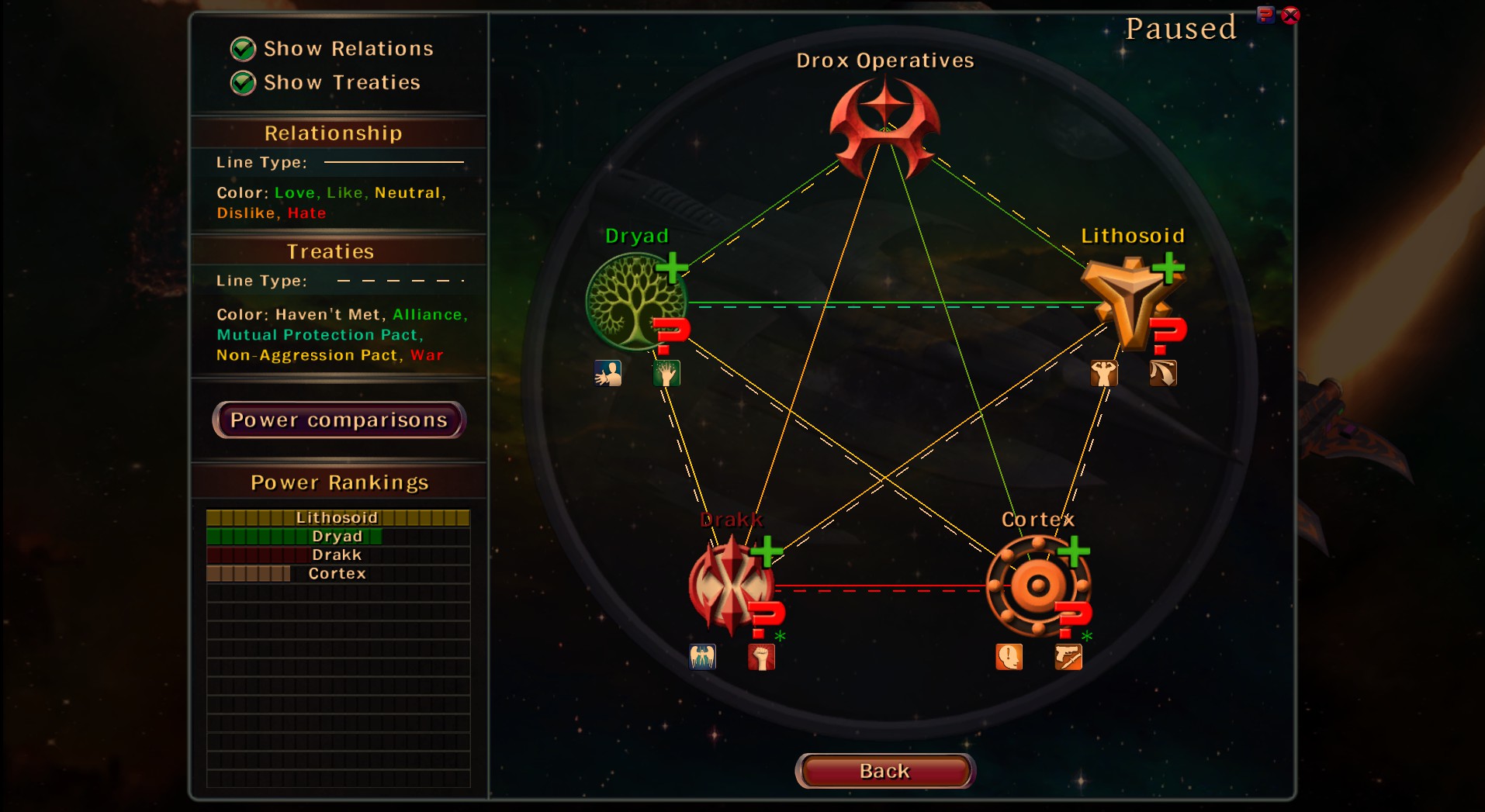
Drox Operative is the latest title from Soldak Entertainment, an indie developer of action-RPGs (Depths of Peril, Din’s Curse) renowned for their dynamic worlds. Drox transports that concept from fantasy into space opera – its galaxy is filled with alien empires, who fight, intrigue, and negotiate amongst themselves. As one of the titular mercenaries, players accept quests from these empires, fight space monsters and rival empires, plant their patrons’ flags over unclaimed worlds – and try to make sure they’re on the winning side.


On paper, this is a wonderful concept, and it’s given me a couple of memorable moments. For example, at one point I wanted to explore a hazardous, monster-filled region of frontier space. To make my life easier, I took a quest to colonise a nearby planet, then stuck around to defend the new settlement. The result: now I had somewhere to repair, and the owner of the new colony was now both stronger and better disposed toward me. And there is a certain dark satisfaction in teaching recalcitrant alien empires why messing with a Drox operative is a bad idea! Unfortunately, these cool experiences have been the exception for me. As an overall package, Drox falls flat for me; while I can quibble with various “micro” aspects of the game’s execution (1), I think my ultimate problem lies with two key aspects of the game’s design:

Read more

Musical Monday: “I Was Born For This” (Journey), composed by Austin Wintory

Following my review of Journey, this week’s song is that game’s closing theme, “I Was Born For This”. (I don’t think the similarity to Ico‘s closing song is a coincidence.) Enjoy!


Full credits for song: “I Was Born For This” was composed by Austin Wintory and sung by Lisbeth Scott.