Journey: The Verdict


How much can we care about a digital companion?


Whole games have been built around this question – most notably 2001 classic Ico, which cast players as a young boy who had to escape a witch’s castle together with a girl named Yorda. Together, the two made a team: Yorda was frail, but she was the only one who could open the castle’s magically sealed doors. And it worked: Ico is one of my all-time favourites. Subsequent games – such as the modern Princes of Persia – ran with this idea, but implemented it the same way: your companion was always computer-controlled, and there was a gameplay reason you needed to work with her (for good measure, it was always a her). Thatgamecompany’s Journey is the latest game to tackle this question… but this time, it puts its own spin on the formula.


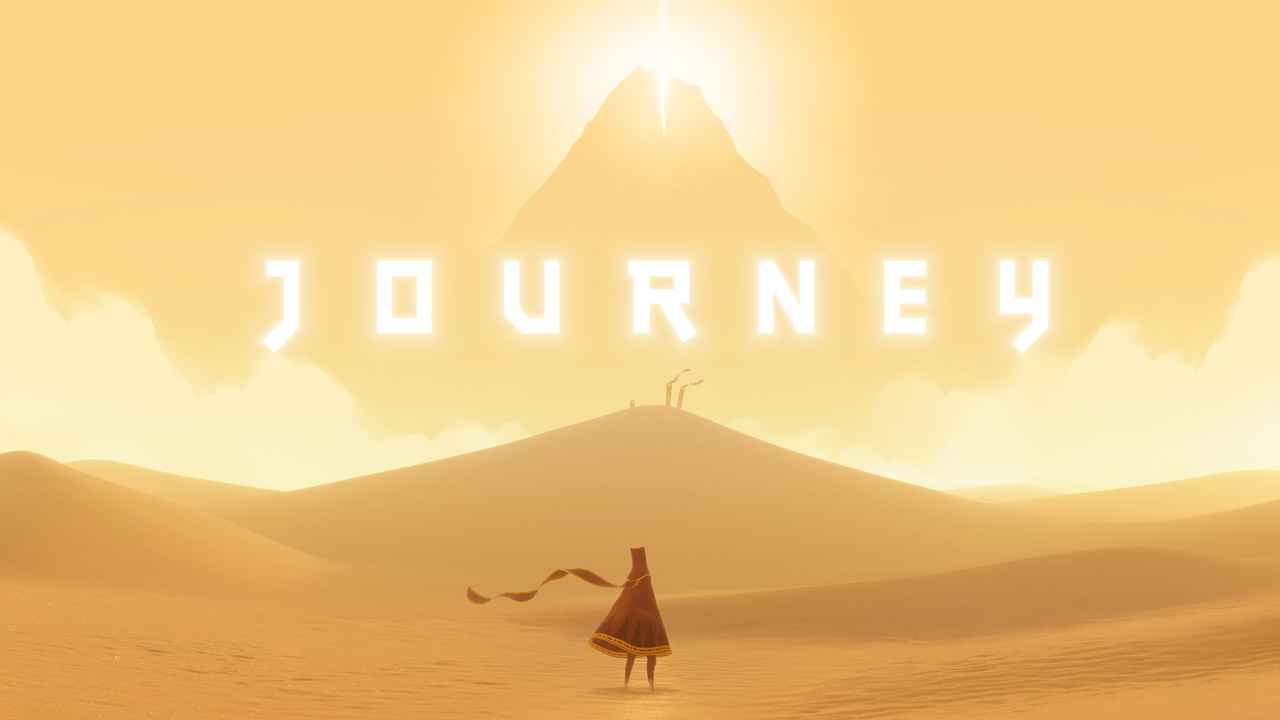
In Journey, you play a cloaked traveller who has to cross the desert to reach a distant mountain. There is no dialogue, no narrative, and no exposition. Who is the traveller? The answer seems to be “a pilgrim”, but this isn’t stated outright anywhere – it’s something I deduced. Is the pilgrim a he, a she, or an it? I imagined my pilgrim as a she, but that was pure whimsy. Did she have family or friends before deciding to cross the desert? Who knows. Journey’s gameplay mechanics are equally minimalistic: mostly, the pilgrim walks towards her destination. She can use the magic in her scarf to jump or fly, and she can recharge her scarf by chirping musically when standing near bits of cloth scattered throughout the world – streamers, banners, magic carpets, and the like. This is pleasant enough – controlling the pilgrim is smooth and fluid, whether she’s on the sand or soaring through the air – but that’s about it as far as game mechanics go. There is no real challenge, except for looking/walking around, wondering where to go next. There are neither puzzles nor combat. There isn’t even a Game Over screen – it is impossible to die. The overall game is quite short, just a couple of hours. In this regard, Journey feels a lot like thatgamecompany’s previous title, Flower.
Read more

Musical Monday: “Into the Light” and “Voyage” (Final Fantasy series), composed by Nobuo Uematsu

Long before video game music took off in the West, the Final Fantasy series had a long tradition of beautiful vocal and orchestral music —  all the way back to the NES/SNES era! Developer Squaresoft circumvented the technical limitations of the time by re-arranging its in-game music into orchestral, piano, and vocal CD albums, which remain a treat to this day. Below, I’ve linked two of my favourites, both from the 1994 “Final Fantasy: Pray” vocal album. “Into the Light” (Japanese: “Hikari no naka e”) is based on “Theme of Love” from Final Fantasy IV, while “Voyage” is based on “Boundless Ocean” from Final Fantasy III (NES). Enjoy!


Full credits for songs: Both songs were composed by Nobuo Uematsu. Both were sung by Risa Ohki.

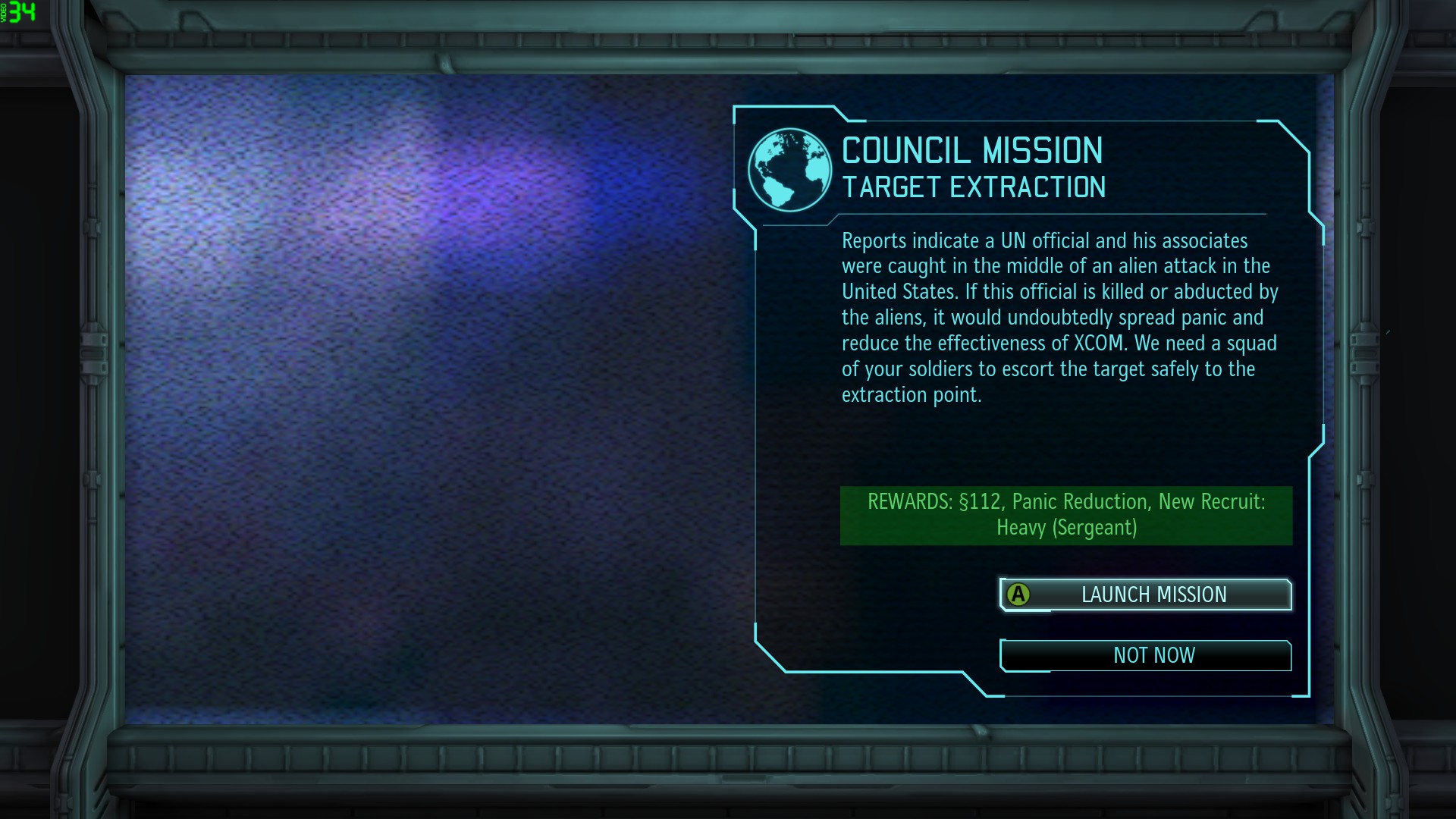
XCOM: Enemy Unknown – The Verdict

This entry is part 10 of 12 in the series XCOM: Enemy Unknown/XCOM 2

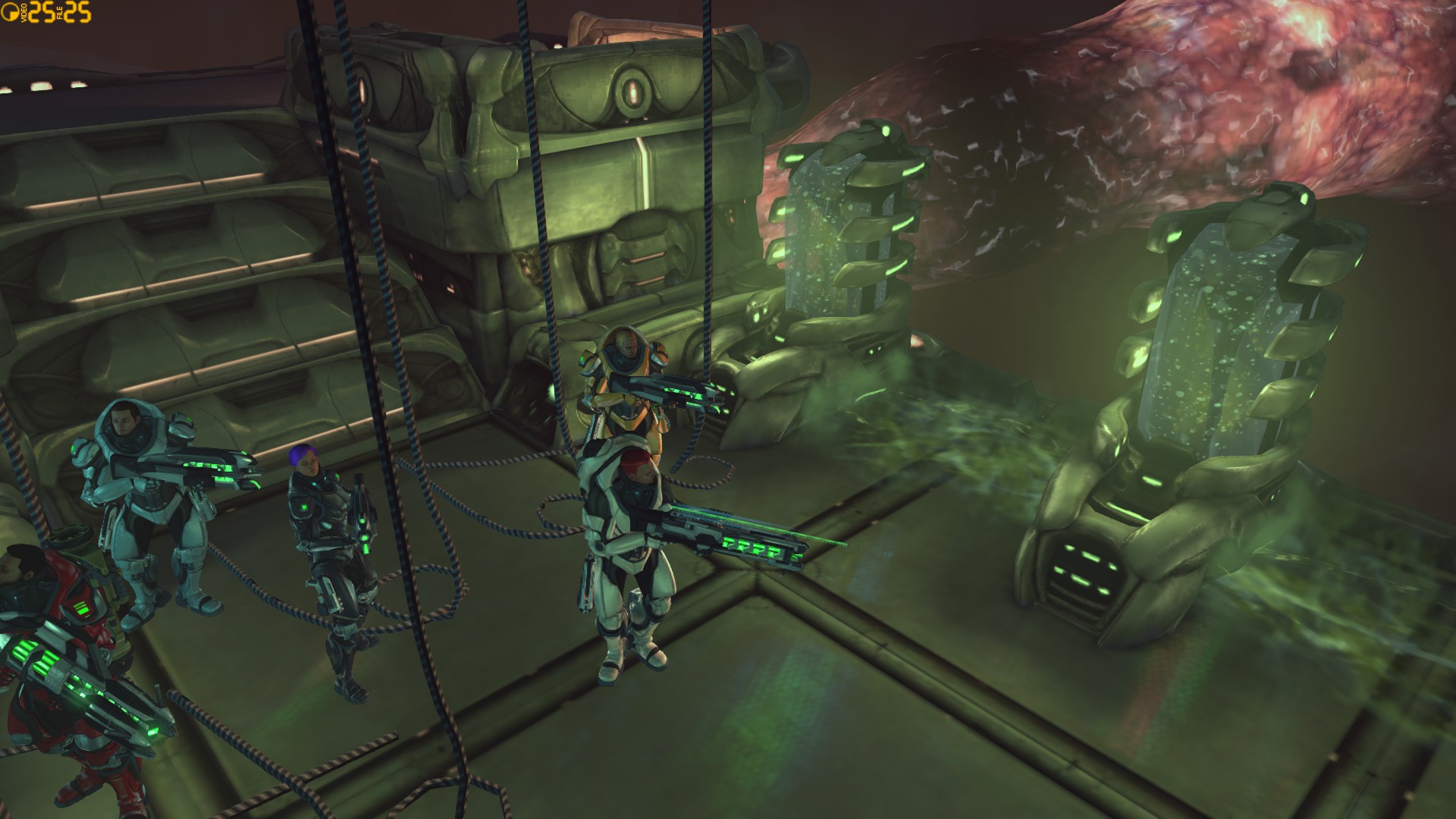
For one month, you followed me as I played through Firaxis’ XCOM: Enemy Unknown, the successor to one of the greatest games of all time. Now that I’ve finished, I can give my verdict: this is the true heir to the original, both in its strengths and its weaknesses.


At heart, both 1994’s X-COM and 2012’s XCOM are stories about heroism. That is something so many games claim to offer, but so few truly do. Heroism is not a power fantasy. Heroism is not about being the toughest guy alive (action games), or the sneakiest, or the cleverest general (Total War). Heroism is the courage to stand up against overwhelming odds, to endure loss and sacrifice on the road to victory. This is the experience that XCOM delivers in spades.  Like its predecessor, XCOM follows a handful of outnumbered, outgunned, and oh-so-fragile men and women in their struggle against a technologically superior alien invasion. They are few enough, and diverse enough in their capabilities, to be distinct: I knew every name and face in my barracks. That makes it hurt all the more when they die – which they do often and permanently. For those odds, at least on “Classic” difficulty, really are overwhelming. On the world map, the aliens often launch three attacks at a time, while XCOM can only respond to one. Once in battle, XCOM operatives will usually die in two or three solid hits. But – and this is key – thanks to the context provided by the game’s strategic layer, that sacrifice never feels in vain. Slowly but surely, those brave underdogs will turn the tide of the war. With each battle, the survivors grow more skilled. With each pile of recovered alien loot, the survivors become better equipped. With each XCOM satellite and fighter plane (their construction funded by that loot), the world takes one step back from the brink. With each act of bravery by your soldiers, XCOM comes one step closer to victory.

Read more

Aviators of the smoky skies: Guns of Icarus Online

This entry is part 1 of 3 in the series Guns of Icarus Online


“You are required to manoeuvre straight through this debris…”

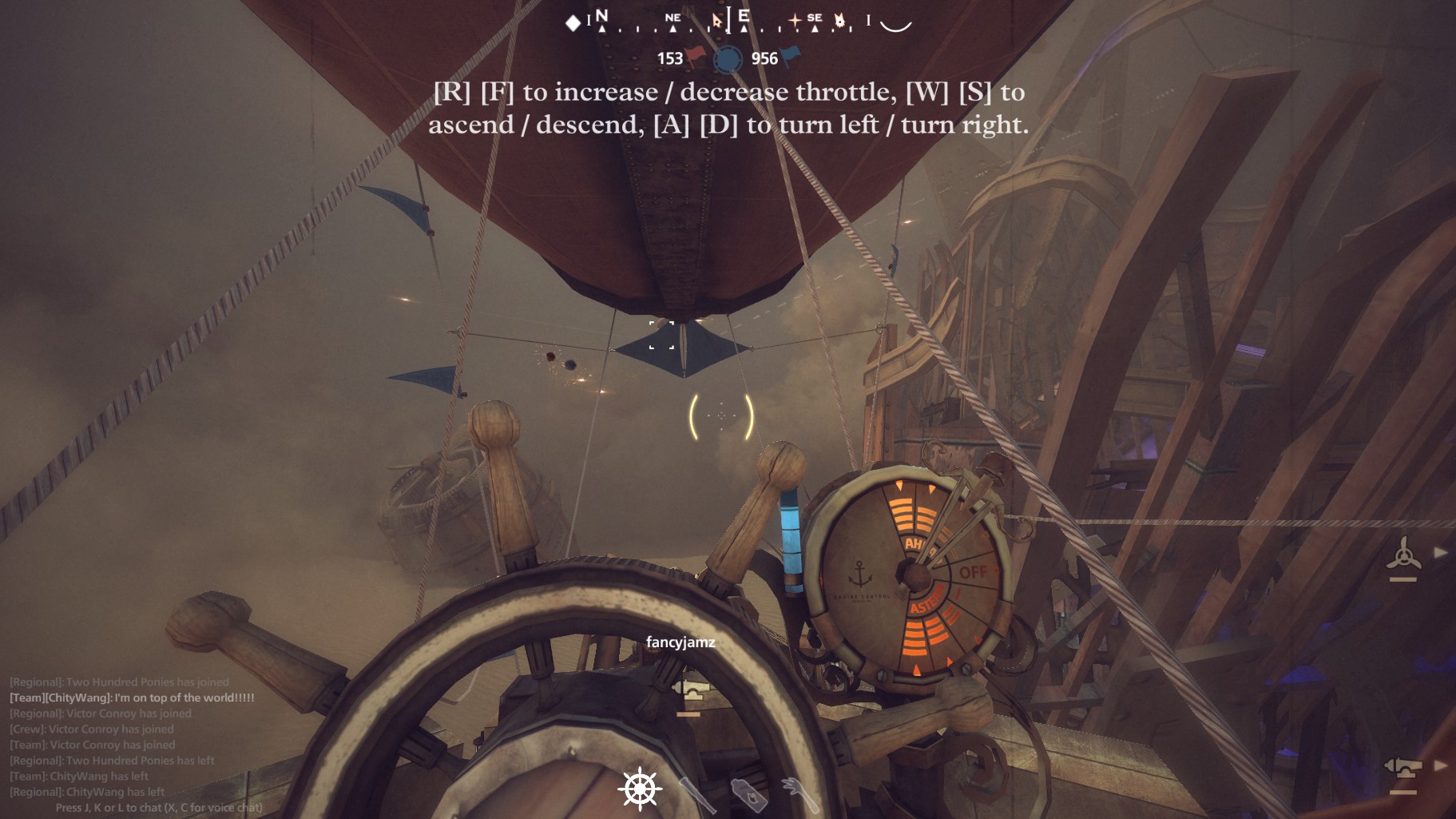
It seems all over for the crew of the airship Babbling Goldfish. On one side – the enemy, two airships bigger and heavier than ours. On the other – the ruins of a vast, ancient airship, still lodged vertically in the desert sand. Our hull and engines are being ripped to shreds, and the airship wreck blocks the most direct escape. Over voice chat, the consensus sounds in my ears: we’re going down. But manning the helm, I see one last chance. I steer us between towering pieces of wreckage – bare planks to our left, a piece of red-plated debris to our right. And the incoming barrage dies down. Did the wreck hide us from our pursuers? Or did they simply get bored and drift off? Whatever it is, we’re safe for now. Safe to make repairs, and safe to eventually rejoin the fight…


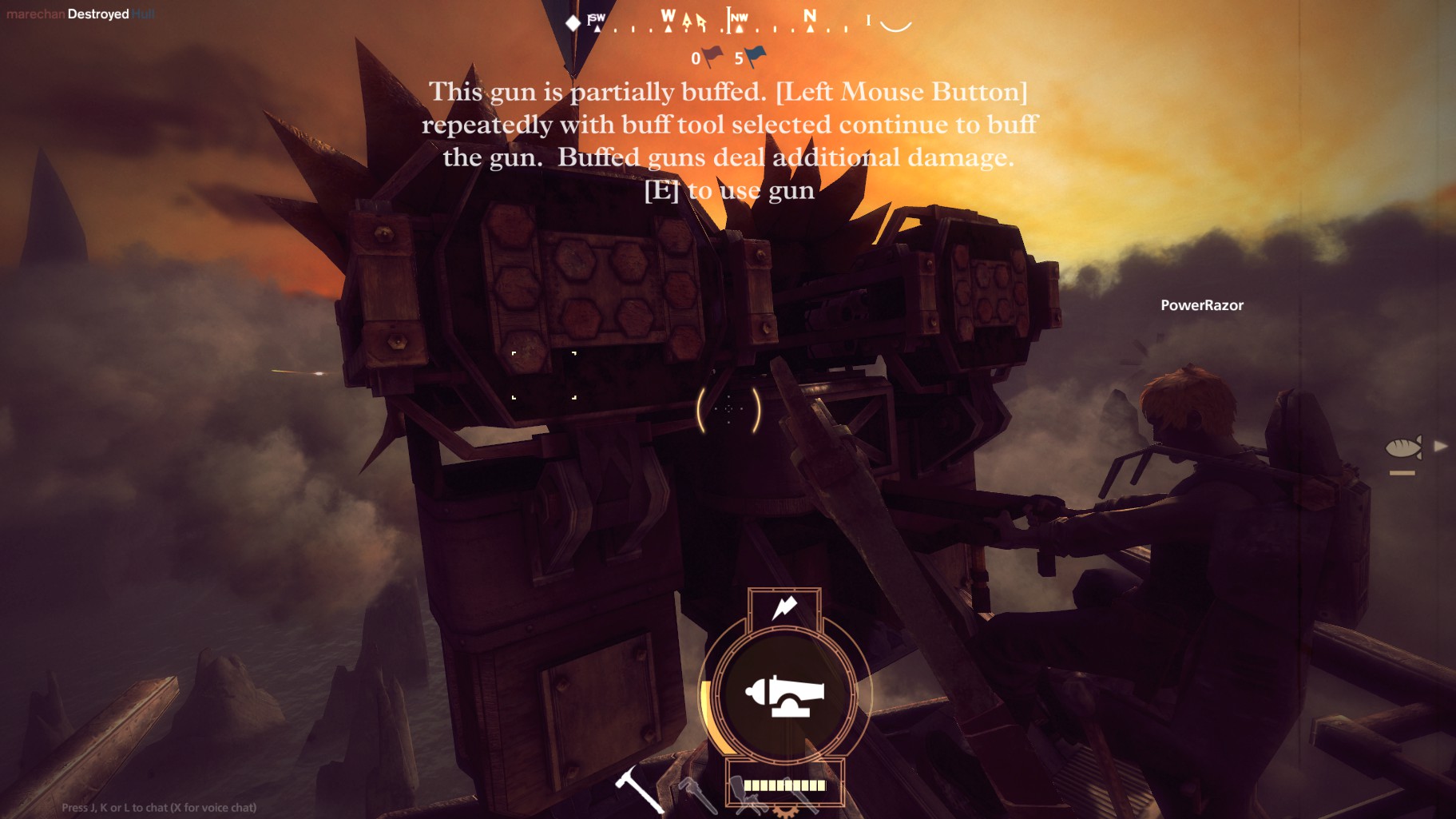
Each class has its own part to play. Here, I’m about to buff our main gun.

That is one of the stories I have accumulated in my last couple of weeks playing Guns of Icarus Online, a team-based airship combat title from indie studio Muse Games. (You might remember my very brief mention of the game last year, when it was just a trailer and a cool concept.) In Icarus, players take on the roles of airship crew – gunners, engineers, or pilots, with four crew members to one airship. (Note that the game is strictly PVP; while most unoccupied crew slots are filled by bots, each airship must be skippered by a human player.) Matches involve two teams (2-4 airships per side, depending on the map) either trying to score a set number of kills, or hold objective locations long enough to win. Each ship’s captain can choose between six available ship types, each of which can be further customised via choice of weapons – for instance, do I mount a flak cannon (long-ranged and best against the enemy hull), a carronade firing grapeshot (close-ranged balloon-popper), or a Manticore rocket launcher (long-ranged disabler) in my main gun slot? And depending on their class, crew members can choose which repair/buff items, ammo types, and piloting boosts to take into battle. Once in the game, the slow, deliberate combat feels closer to MechWarrior than to the typical FPS – ships take a while to reach their destination, and guns don’t fire that quickly. This changes once the ship takes damage – then it becomes a frantic game of ohnotheengineisred, and Someone fix the hull before we all die!

Read more

Musical Monday: “Exceeding Love” (Suikoden III), composed by Michiru Yamane et al

This week’s song is something I guarantee you’ll find unique: “Exceeding Love”, the opening song of PS2 RPG Suikoden III. I’ve linked two versions below. The first is the actual in-game version, presented as part of the game’s intro movie — my favourite intro movie ever. The visuals and music complement each other perfectly, and as an added bonus, every single character and event depicted in that video — dragonfly-mounted warriors firebombing a village,  knights charging into battle, a boy facing off against a dragon, torchbearers filing through the night, whole armies on the march — actually features in the game! The second version of the song is a clearer, sharper, deeper remix that I prefer, though sadly this one lacks the accompanying visuals. Enjoy!


Full credits for song: The game’s soundtrack was composed by Michiru Yamane, Keiko Fukami, and Masahiko Kimura. “Exceeding Love” was performed by the band Himekami.

Let’s Play XCOM: Enemy Unknown! Part 7 (FINAL): Avenger

This entry is part 9 of 12 in the series XCOM: Enemy Unknown/XCOM 2


North America, 1 September 2015. The aliens’ forward base on Earth, the wee hours of the morning. Above the landing bay, a shape appears: XCOM’s Skyranger, followed moments later by a hover SHIV and five of XCOM’s finest operatives. The soldiers rappel down into the base, plasma rifles at the ready. Little do they expect what lies ahead: an anti-climax.


Read more

Book review: The Lantern Bearers, by Rosemary Sutcliff

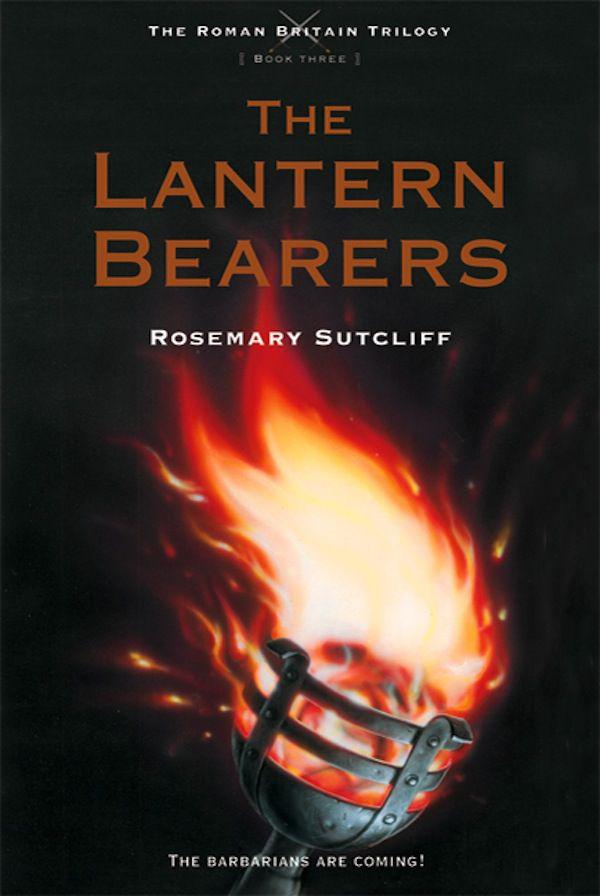
The Lantern Bearers, a 1959 historical novel by Rosemary Sutcliff, is officially a children’s book. It is also one of the best, most mature stories I have read in a long time, with a simple but powerful appeal. When it comes down to it, most stories – books, films, games – show us the world as we would like it to be. Some show us the world as their creators think it is. Some show us the worlds we fear. But every so often, one will show us* the world as it really is. And in TLB, I feel lucky to have read one of those rare gems.


Set in fifth-century Britain during the Anglo-Saxon invasions that followed the Roman withdrawal from that island, TLB tells the story of one Roman who stays behind to make a stand. Instantly, that tells us something. Regardless (no spoilers!) of what will happen to the characters, we know how this war will eventually end. We know the Roman Empire, both as a whole and in Britain, will collapse. We know the Dark Ages are about to descend. And that sense of changing times is imprinted on every page of TLB. It propels the world. It propels the plot. It, notably, propels the characters – the subtitle of this book could be, “Times change, and people change with them.” The realism with which they do is one of the book’s greatest strengths. This, I felt as I read it, is how people would really behave.

Read more

Musical Monday: “Baba Yetu” (Civilization IV), composed by Christopher Tin

This week’s song is another golden oldie: “Baba Yetu”, the opening theme to 2005’s Civilization IV. Soaring, hopeful, filled with joy — this is the perfect celebration of civilisation, of our achievements in science and art and engineering. Sadly, the official music video below (with its footage taken from the game’s intro movies) also highlights the other half of Civ, our talent for finding new ways to kill each other, but that’s another story…


Note that the official music video uses the version of the song from the “Calling All Dawns” album. Enjoy!


Book review: Captain Vorpatril’s Alliance, by Lois McMaster Bujold

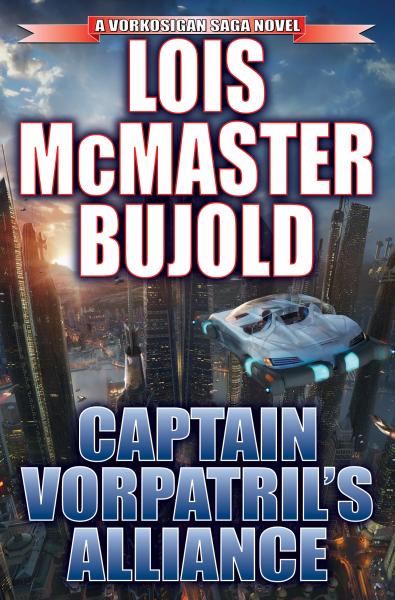
Captain Vorpatril’s Alliance is the latest instalment in what is, probably, my single favourite speculative fiction series – Lois McMaster Bujold’s Vorkosigan Saga. For 26 years, Bujold has chronicled her hero, frail-but-driven princeling Miles Vorkosigan, as he grew from a teenager desperate to prove himself into a mature, confident adult. In CVA, she switches tack to focus on one of the series’ supporting characters – Miles’ cousin and sometime sidekick, Ivan Vorpatril. I’ve been looking forward to this book for a very long time, so how did it compare to my expectations?

Read more

This is brilliant – video game characters drawn in traditional Japanese style

“Rickshaw Cart”, by Jed Henry


Ukiyo-e Heroes, an art series by Jed Henry, takes a simple concept (how would the heroes of classic video games look if they were drawn in traditional Japanese woodblock style?) and executes on it brilliantly.  I love, for instance, the above riff on Mario Kart. Mario is clearly recognisable, but his garb, expression, body language, and of course, his vehicle have all been reimagined to fit the theme; the dimunitive Toad has become a rather scrawny rickshaw driver; and to cap things off, Mario and Bowser are pelting each other with period versions of, respectively, a red shell and Blooper the ink-filled squid.


You can view the other images in the series — Metroid, Sonic, Mega Man, Zelda, and more — at Jed’s site or at the series store. Unfortunately, at this point, it seems the only downloadable product at the store is a black-and-white colouring book ($10), while hardcopies are significantly more expensive (prints start at $40; and woodblock prints produced by Jed’s collaborator Dave Bull are $135). I’ve contacted Jed to ask if he plans to make a high-quality digital artbook available for purchase. Until then, enjoy the images on the site!


EDIT: Jed informs me via email that he “[thinks] a book will be coming in the next year or so”, so stay tuned!

Korean and Japanese pop culture

… I soon found myself in a delighted mob of fans, many of whom had been lined up since 8:30 am. Some had handmade signs: I LIKE LUHAN MORE THAN FREE WIFI, said one. They were well behaved, queuing quietly without complaint, despite most events and kiosks being crowded beyond belief or comprehension. The exception? The beer stand, whose two disgruntled-looking vendors said had sold exactly two brews all day. That’s because the vast majority of attendees were too young to drink, and looked even younger.


This from the WSJ‘s Speakeasy blog, which takes an interesting look at the relative fortunes that Japanese pop culture — music, anime/manga, and to a lesser extent, games  — and its Korean counterpart have enjoyed in the West. I don’t know enough about the Korean Wave to comment on that aspect, but certainly the discussion of anime rings true to me. Worth a read if you’re interested in Asian popular culture.

Humble Bundle for Android #4: The Highlights (Waking Mars, Swords & Soldiers, Crayon Physics)

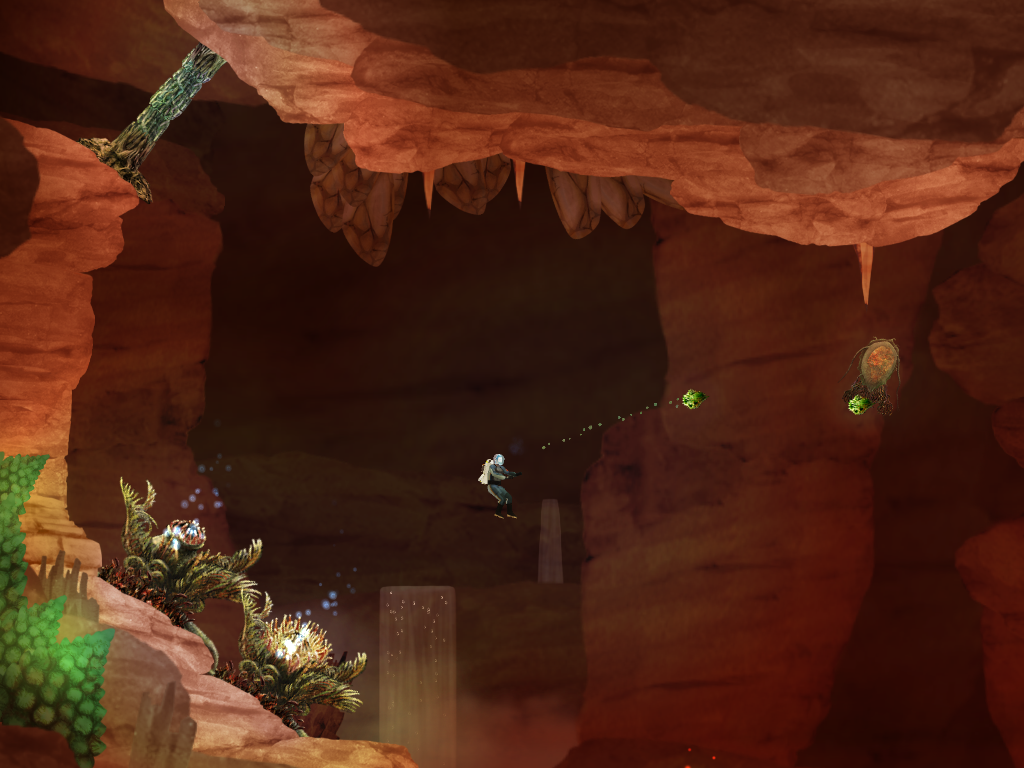
A screenshot of Waking Mars. Credit: Tiger Style


So I’ve had a few days to play around with the current Humble Bundle, Android #4– by way of introduction, this offers Android, PC, and Mac copies of five indie games (Splice, Eufloria, Waking Mars, Crayon Physics Deluxe, and Superbrothers: Sword & Sworcery EP) on a pay-what-you-want basis. Paying more than the average (currently $6.61) will add another six games: Machinarium, Avadon: The Black Fortress, Canabalt, Cogs, Swords & Soldiers HD, and Zen Bound 2.


Of these, I’ve dipped very briefly into Eufloria, Superbrothers, and Machinarium, but I’ve preferred to spend my time with Waking Mars, Crayon Physics (which I’ve owned on Steam for a while), and Swords & Soldiers (both on Android and on Steam). Brief thoughts below…


Read more

Musical Monday: “Ryoshima Coast” (Okami), composed by Hiroshi Yamaguchi

With Okami HD now out for PS3, this is a great time to showcase another one of my favourite songs from the game. Where the Shinshuu Fields were the hub for the game’s first half, the Ryoshima Coast is the hub for the second half; its beautiful music is the perfect match for its visuals. Enjoy!


Starbase Orion Android/PC port to be Kickstarted next year!

Good news, fellow Android gamers! Starbase Orion, Chimera Software LLC’s Master of Orion-style strategy game for iOS, may come to Android next year. I sent an email to developer Rocco Bowling, and this was his reply:


I will be holding a KickStarter campaign early next year to help raise funds to port SO to Android and PC.  If it gets funded, it’ll get ported!


So keep an eye out for that campaign, folks!

Let’s Play XCOM: Enemy Unknown! Part 6: SHIVs, Stopgaps and Archangels

This entry is part 8 of 12 in the series XCOM: Enemy Unknown/XCOM 2

The battle of Melbourne, June 2015, dealt a bitter blow to XCOM.  It left us down two countries and five soldiers (four of them amongst our finest veterans), and painfully exposed the inadequacies of XCOM equipment against the aliens’ latest toys. The laser weapons and carapace body armour that had served us so well, just a month or two ago, now look like a joke against Cyberdiscs. The new faces joining the squad are under-levelled marksmen of dubious skill.


But XCOM is a game about fighting back against the odds. This update is the story of how my survivors – a lopsided bunch, with too many snipers and too few heavies and support troopers – make do.


Read more

How to turn your DVDs into video files you can enjoy on an Android device

This year I’ve had a lot of fun rewatching many of the anime series I discovered as a teenager, usually on my Asus/Google Nexus 7, which combines portability, reasonable price, and an attractive screen. However, my anime collection is on DVD, so it takes a little bit of time to get shows off the disc and onto my tablet. Luckily, that’s all it takes – time! The process is easy, simple, and won’t cost you a cent (beyond the outlay of buying the DVDs, of course).

Read more

Let’s Play XCOM: Enemy Unknown! Part 5: Pride Goeth Before a Fall

This entry is part 7 of 12 in the series XCOM: Enemy Unknown/XCOM 2

As Part 4 ended, things were going smooth as butter. XCOM’s soldiers were winning battle after battle, and coming home almost invariably in one piece. The strategic layer was under control, thanks to XCOM’s ample satellites and newly ample cash.


As June 2015 dawns, it seems fair to ask: what could possibly go wrong?

Read more

Musical Monday: “Uncle Samurai” (Total War: Shogun 2: Fall of the Samurai), composed by Jeff van Dyck

While I was bitterly disappointed by Creative Assembly’s Fall of the Samurai, the stand-alone expansion to last year’s Total War: Shogun 2, its soundtrack was another matter. Series composer Jeff van Dyck turned in some of his best work to date, as seen in energetic battle theme “Uncle Samurai” (Uncle Sam + Samurai – geddit?). Enjoy!


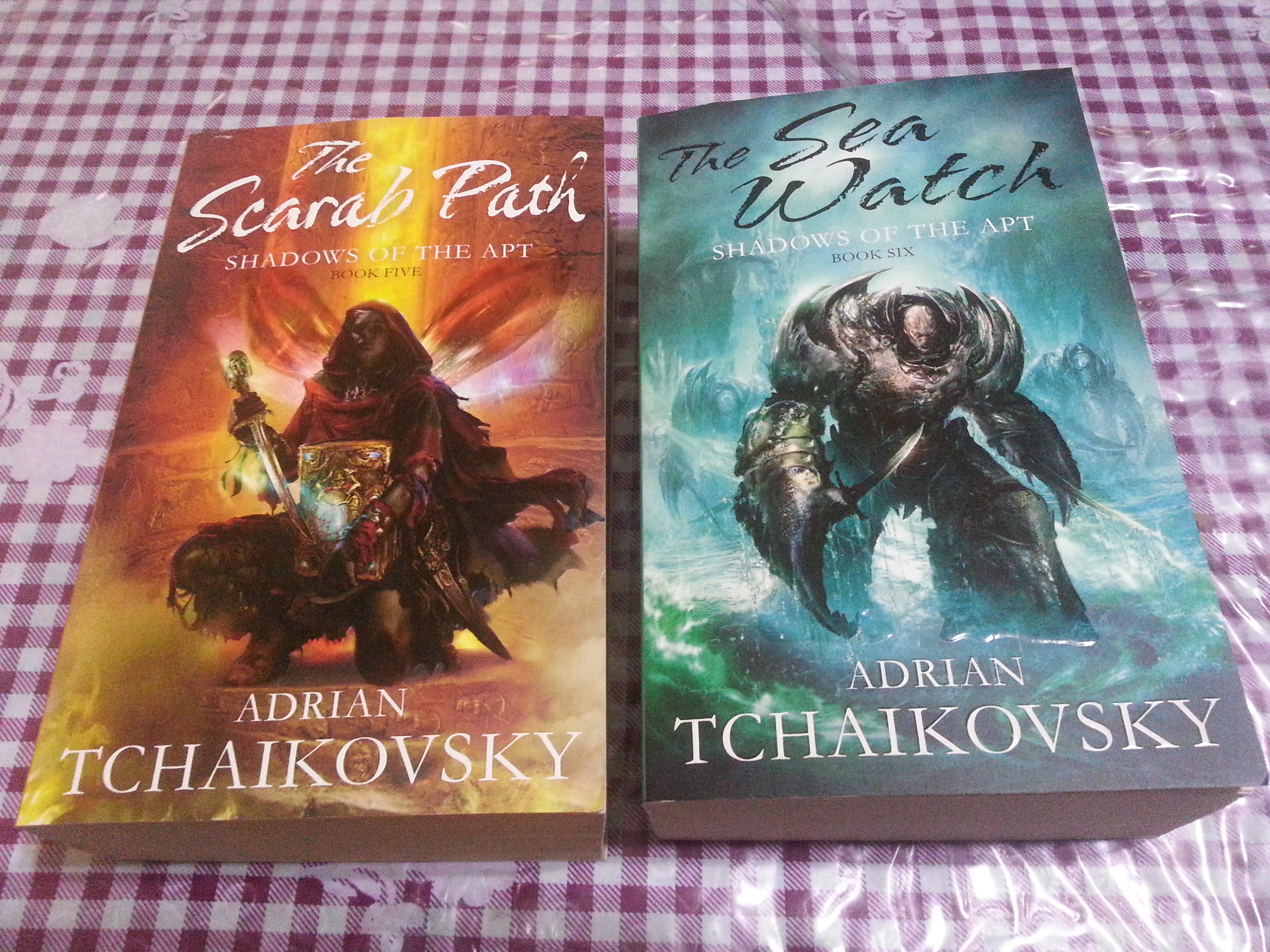
Book review: The Scarab Path & The Sea Watch, by Adrian Tchaikovsky


The Scarab Path and The Sea Watch are respectively books 5 and 6 in Adrian Tchaikovsky’s Shadows of the Apt series. (You can find my review of book 1, Empire in Black and Gold, here; and my review of books 2-4 here. Start with the first book – individual entries don’t stand alone!)  While the two books feature different characters and take place on opposite ends of Tchaikovsky’s world, I’ve chosen to review them together because of how well they cast into relief the author’s strengths – and his weaknesses.


In a nutshell, Tchaikovsky’s strength is his imaginative setting. His brew of magic,  steampunk mad science, and creative, insect-themed fantasy races grabbed me from the very first page of book 1; that hold continues in #5 and #6, in which Tchaikovsky takes his characters to new and wondrous locales. Tchaikovsky’s weakness is his tendency to use that fascinating world as nothing more than a backdrop for generic fantasy plots, populated with largely generic fantasy characters.


This is where the difference between #5 and #6 becomes apparent. In #5,  Tchaikovsky plays to his strength and avoids his weakness. It is the closest he has come to a character-driven story – while there’s an exciting external conflict plotline, the heart of the novel is about two people trying to cope with the scars left by earlier books – and it works. The resulting sense of depth makes #5 by far my favourite in the series – even if I did giggle at one character’s overly melodramatic fashion sense.


Unfortunately, #6 didn’t live up to that. #6 has a strong middle section in which the characters explore their new surrounds, but my suspension of disbelief was badly marred by a ludicrously slimy early villain who did everything short of tying widows to lightning-powered train tracks. In general, #6 also feels far less character-driven, and far more action-driven, than #5 – in this regard it’s a throwback to the earlier books in the series, and that just isn’t something I enjoy as much as I did #5.


I concluded my review of parts #2-#4 by saying, “I do plan to check out the next book at some stage, and I hope Tchaikovsky learned his lessons.” I don’t think he did – or rather, he did for #5, only to seemingly forget them for #6. That leaves the series as interesting, original, readable beach/airport novels (almost literally – I read #5 and #6 during down time on my travels). Will they ever be more? After six books, I doubt it. But sometimes, a good beach novel is exactly what I need, and when I do, I will happily reach for Tchaikovsky #7.


Resources

Buy The Scarab Path (Book #5) from Amazon US

Buy The Sea Watch (Book #6) from Amazon US


Musical Monday: “Icarus” (Deus Ex: Human Revolution), composed by Michael McCann

Sorry for the delays, guys — Musical Monday is back! Since I’ve been talking a lot about XCOM: Enemy Unknown lately, for this week’s song I’ve opted to present one of composer Michael McCann’s previous works: “Icarus”, from Deus Ex: Human Revolution. What I love about “Icarus” is the way it blends two very different musical strains. There’s the obligatory cyberpunk techno, but also haunting vocals that hint at the game’s attempt to tell a story about the human soul, the desire to surpass the flesh. (In the end, sadly I don’t think the game lives up to that ambition, but that’s a subject for another day.) Enjoy!


Aubrey & Maturin sail onto Kindle!

Source: Amazon.com


Calling all lovers of good books! Patrick O’Brian’s entire Aubrey & Maturin series (which you might remember from the Russell Crowe and Paul Bettany movie a number of years ago) is now available on Kindle. Now you can carry around an entire Age of Sail magnum opus in the palm of your hand! No more waiting for the next book (and there will be a lot of them; O’Brian completed 20 entries before his death) to arrive!


There are two disclaimers:


1) I’ve only read the hardcopy editions, so I can’t testify as to the quality of the Kindle editions. Anyone who’s read a lot of Kindle books will know there are plenty of shonky e-book conversions out there; hopefully this won’t be one.


2) While the books themselves are excellent, they are so unique that I hesitate to recommend them without a caveat. Despite appearances, they are not nautical adventure novels. Oh, there’s plenty of adventure, and much of it nautical, but at their core these are slice-of-life novels where those lives just happen to be largely spent aboard Royal Navy warships during the Napoleonic Wars. Their core appeal comes from the sensation of being utterly immersed in an unfamiliar world, and to this end O’Brian breaks many of the conventional rules of writing. The prose is dense with both nautical jargon and period language; O’Brian will often skip over explosions in favour of co-protagonist Dr Maturin’s  scientific expeditions; the weather is as much a danger as the French navy; the entire plot of the novel may end in a fizzle. It’s testament to O’Brian’s skill as a novelist that he succeeded despite this.


And he did succeed. O’Brian’s books bring the days of wooden ships and iron men alive for me — the only other historical fiction I’ve found equally effective  being Bengtsson’s The Long Ships. They’re filled with memorable characters, great worldbuilding, and, yes, exciting set-pieces. They even contain the most erudite double entendre I’ve ever seen! If you like history, and you like books, you have to at least check these out. I started with Book 1, Master and Commander; I’ve also seen it suggested that readers could start with Book 3, HMS Surprise. Wherever you jump in, I hope you have fun, and don’t get caught by a lee shore!


Resources

Jo Walton’s re-read of the series (laden with spoilers, so don’t read this before a given book!)

Let’s Play XCOM: Enemy Unknown! Part 4: The Turning of the Tide

This entry is part 6 of 12 in the series XCOM: Enemy Unknown/XCOM 2

And we’re back!


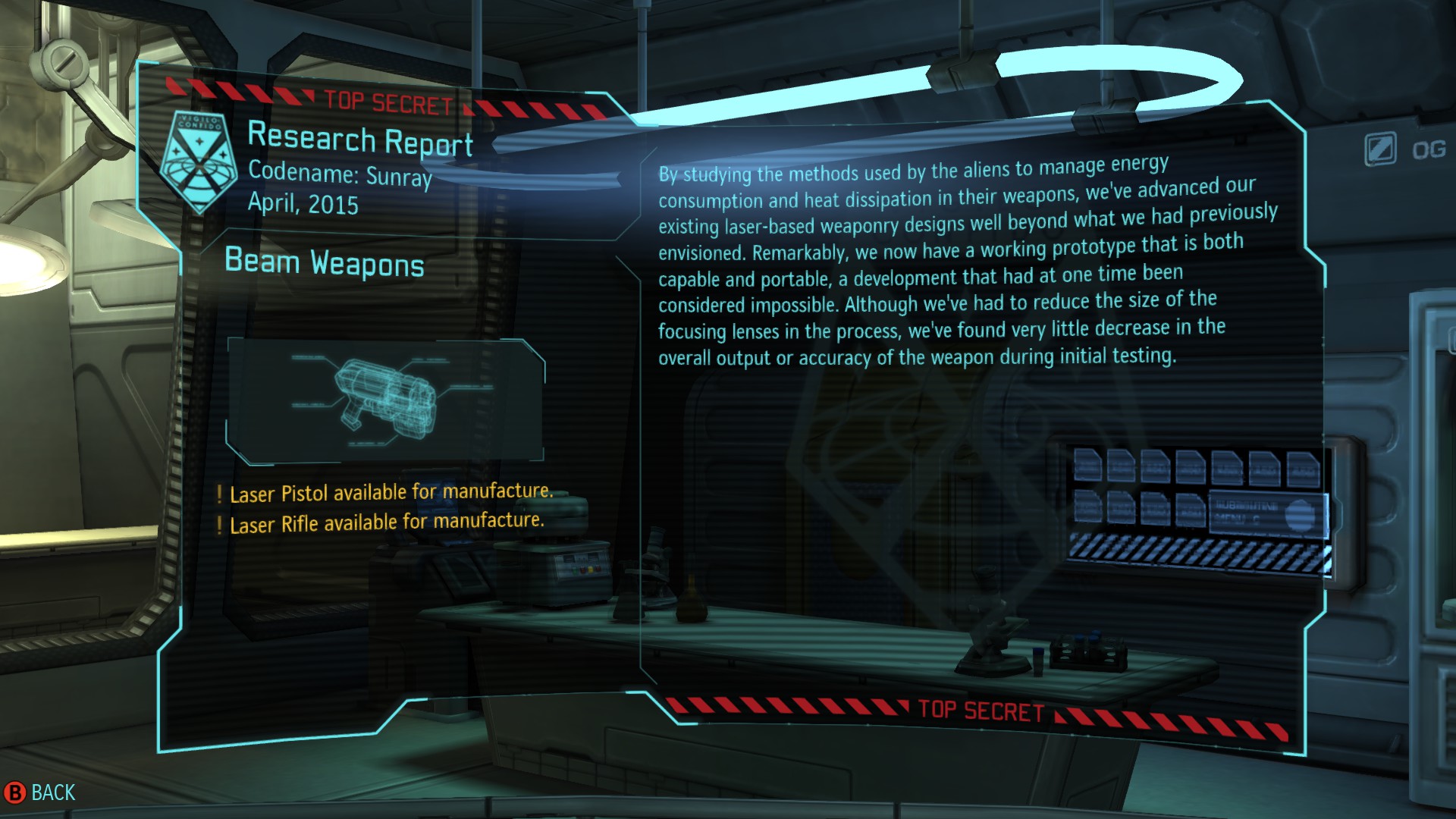
After Part 3’s successful terror mission, the rest of April passes without incident. Dr Vahlen and her scientists finish research on beam weapons, which unlocks laser pistols and laser assault rifles for use by my squad!


Unfortunately, I’m too broke to build more than one of each. Not only do they hoover up cash, they also require precious alien alloys – and my stock of alloys is running dangerously low. Farnsworth gets the laser rifle; LeSquide, our sniper, gets the laser pistol (since he can’t move and fire his sniper rifle in the same turn, he’s the one most in need of a decent sidearm).


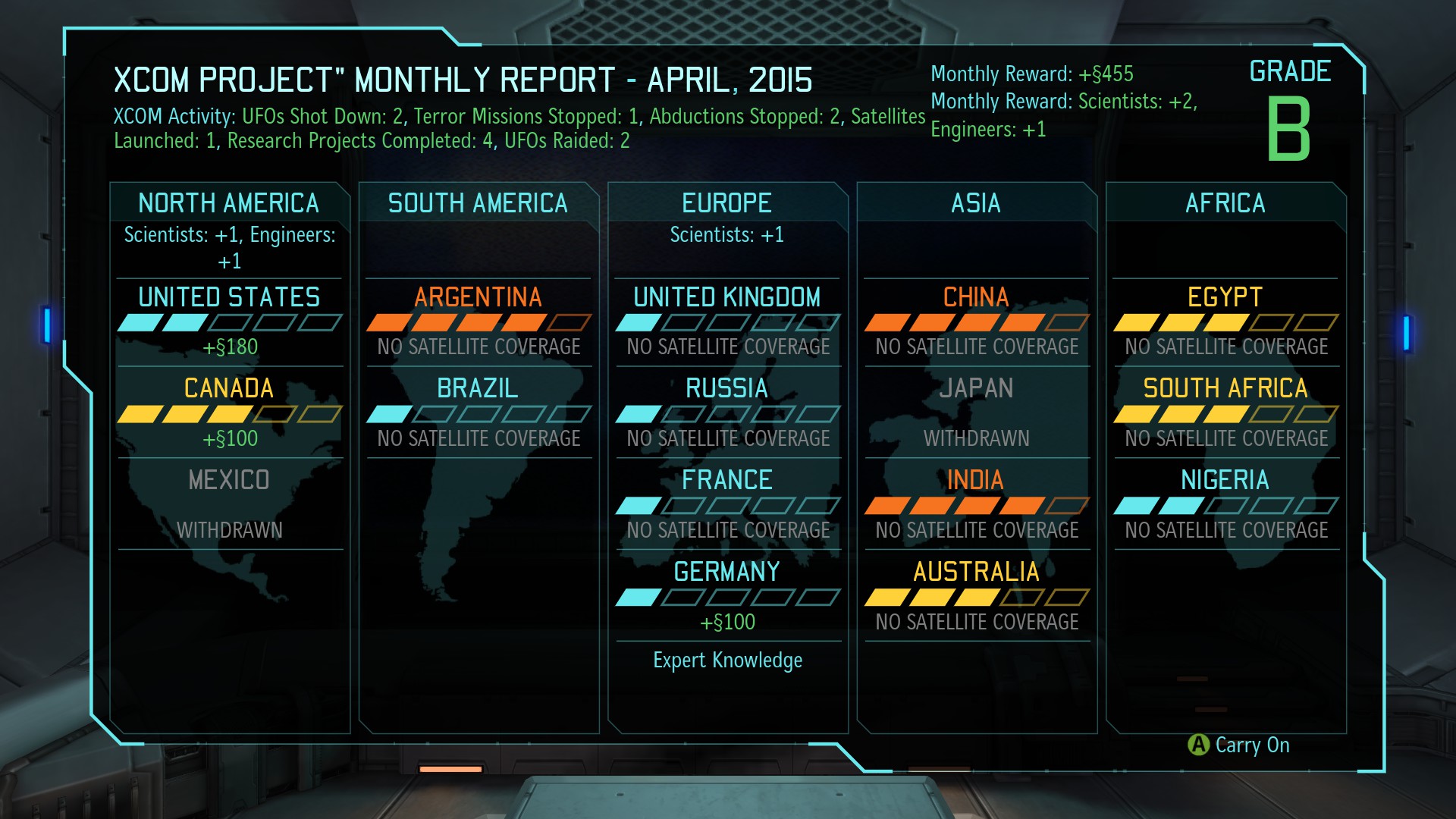
At the end of the month, the Council gives us our scorecard and funding cheque:


As feared, the XCOM Project has lost its first two countries: Japan and Mexico have raised the white flag to the aliens. Three more, Argentina, India and China, are teetering. But all is not lost – I have no fewer than three satellites in the pipeline, plus the cash to build more (and their supporting infrastructure). This coming month, May, will be do-or-die. If XCOM can make it through the month in one piece, by its end I should have enough satellites to halt the tide of global panic. More than that, I’ll have so many satellites, and so much funding, that I’ll never have to worry about scrimping and saving again. If, if, if.


Let’s see how I go.


Read more

Let’s Play XCOM: Enemy Unknown! Part 3: Terror and Triumph

This entry is part 5 of 12 in the series XCOM: Enemy Unknown/XCOM 2

Welcome to the third part of my Let’s Play (Classic difficulty, Ironman mode) for XCOM: Enemy Unknown!


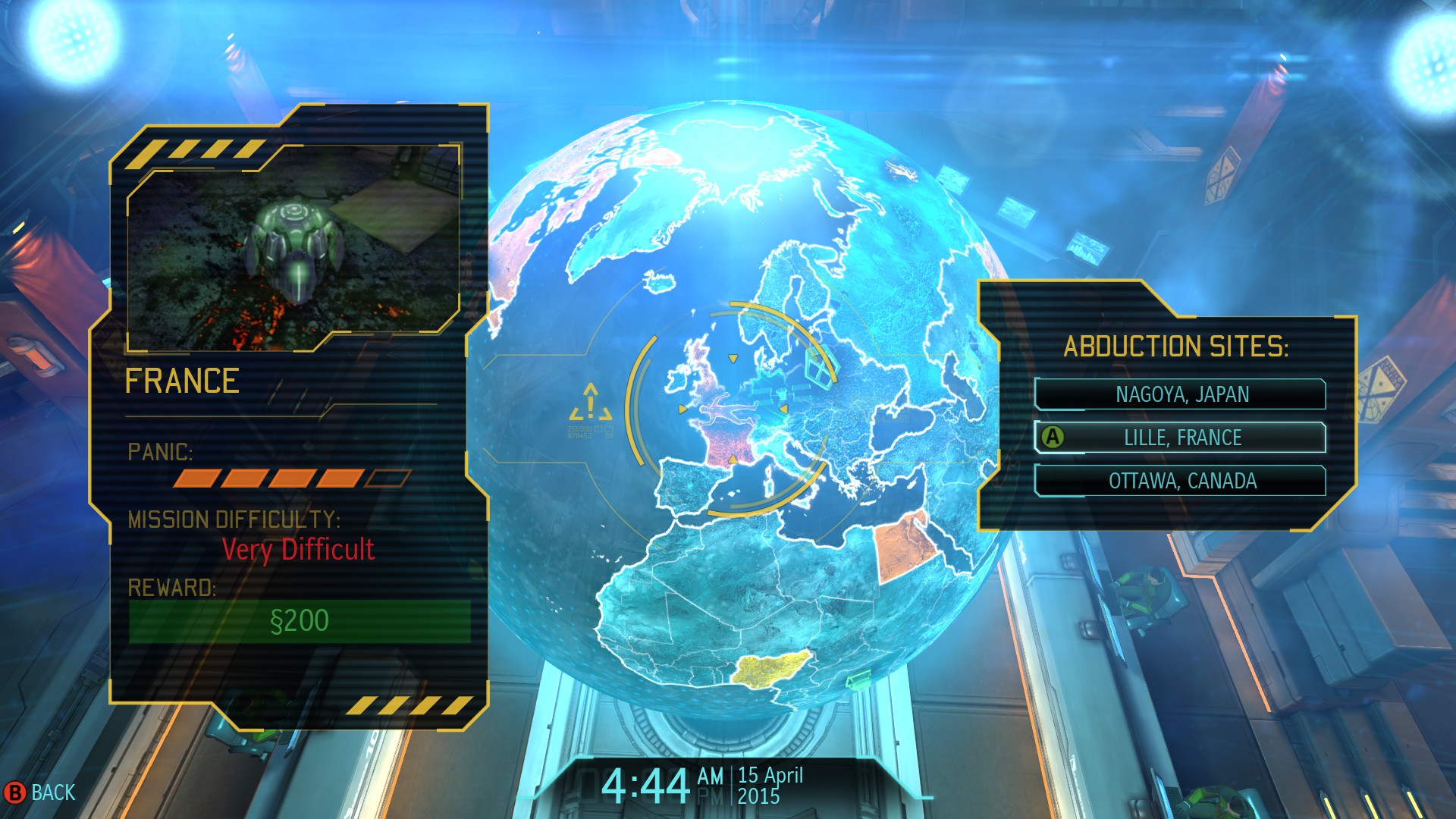
When we previously left off, I had two worries. One, whether I could obtain better arms and armour before the game ramped up in difficulty. Two, a rising tide of global panic. And soon, the game does its best to exacerbate (2) by throwing a devil’s choice at me:


Read more

See you in a week’s time!

Hi everyone! Just a quick note to let you know I’ll be travelling — and hence, unable to work on the site — for about a week, starting this Saturday. However, I’ve scheduled Part 3 of the XCOM Let’s Play to go up over the weekend, so look for it then! Have fun and I’ll see you all soon! :)

Let’s Play XCOM: Enemy Unknown! Part 2: Winning battles, whither the war?

This entry is part 4 of 12 in the series XCOM: Enemy Unknown/XCOM 2

Welcome back to my Let’s Play (Classic difficulty, Ironman mode) of XCOM: Enemy Unknown! We finished our last instalment on March 20 (game time), with a successful end to XCOM’s third battle. Following that battle, XCOM earned a new, experienced Heavy named Talorc, and I began construction of the Officer Training School.


But before I can train any officers, not one day after the previous mission, it’s time to sortie again:


Read more

Let’s Play XCOM: Enemy Unknown! Part 1: Baby Steps

This entry is part 3 of 12 in the series XCOM: Enemy Unknown/XCOM 2

March, 2015. We are not alone in the universe. Humanity is under attack from an alien army equipped with technology beyond anything we have seen. The armed forces of the Earth are powerless. All save one – the mysterious international organisation known as XCOM, sponsored by a Council of sixteen nations. It’s up to XCOM’s soldiers, outnumbered, outgunned, but brave and (one hopes) well led, to stop the aliens in the cities and in the fields. It’s up to XCOM’s scientists to unravel the alien technology the soldiers bring home, and up to XCOM’s engineers to adapt it into something the troops can use. And it’s up to me, the player, to give them all direction. Will I succeed, or will humanity be destined to end up as just another course on the alien buffet menu?


Let’s find out.

Read more

Musical Monday: “Space Beacon” (Digital: A Love Story), composed by radiantx

One of the cleverest and most memorable games I’ve played this year was Digital: A Love Story, Christine Love’s 2010 visual novel. Its retro, pseudo-8-bit music is a key part of its conceit, that the player is a teenager discovering the Internet of 1988. Below is my favourite piece, the energetic “Space Beacon”. Enjoy!


X-COM: That which kills us makes us very dead

With the new XCOM game around the corner, it’s time to reflect on the fallen. The First and Second Alien Wars had horrific death tolls. Tens, hundreds, thousands of little pixel-dudes rotated on the spot to face the player, screamed, and fell down to never rise again. Always those brave men and women turned to face the player. We looked them in the tiny pixel-eye as they expired. It was the least we owed them. Heroes, every one.


What were the main causes of death in these brutal, bloody conflicts? Read on…


The First Alien War is UFO: Enemy Unknown, aka X-COM: UFO Defence for the non-Europeans. The Second War is known by the codename Terror from the Deep. The Third Alien War, dubbed Apocalypse, will not feature here as I sat that one out.

Read more

Highlights from the EB Games Expo Sydney 2012: The Last of Us, Tomb Raider, Wii U, Australian indies and more!

For the last three days the Sydney Showground has played host to the EB Games Expo, and that was where I spent yesterday. There I met some folks from the industry, both publishers and indie developers; watched trailers and gameplay  videos; observed live play; and last but not least, tried out a few titles for myself! Here are the highlights of what I saw (grouped by publisher):

Read more