Satoru Iwata, president of Nintendo, has passed away at 55. Here is the best obituary I’ve found.
EDIT: Here is another good retrospective on his work.
Writing about worlds of wonder: strategy games, stories, and soundtracks
 Peter Sahui
 Report of the Spanish ambassador to Meiguo, 1600
In the three months since I departed Your Majesty’s presence, I have travelled first to our colony of New Spain, then thousands of miles north overland. I write to you now from the court of Meiguo, on the shores of another sea.
Like ourselves, the rulers of Meiguo are not native to the New World. They trace their ancestry to a deposed emperor of China, who fled his home near two centuries ago. Since arriving, they have extended their reach far south and east: they abut our colonies in Mexico, and also along the Rio Grande.
While Meiguo’s domains are vast, they are sparsely populated. I saw few towns during our journey north; I will be surprised if these lands contribute much to the Meiguo purse.
A mix of interviews and retrospectives this week:
No EU4: Common Sense update this weekend, I’m afraid – real life has intervened. The adventures of Meiguo will resume next week.
Between Dishonoured 2, Fallout 4, and The Last Guardian, this E3 was my favourite in years. You’ve probably already seen the high-profile stories; here are a few that slipped through the cracks:
One of the things I love about AC4 is its use of … well, not quite period music – Wikipedia dates this song to the 1800s, well over a century after the game takes place – but pre-existing folk music and shanties. For me, that does a lot to root the game in a sense of time and place. Enjoy!
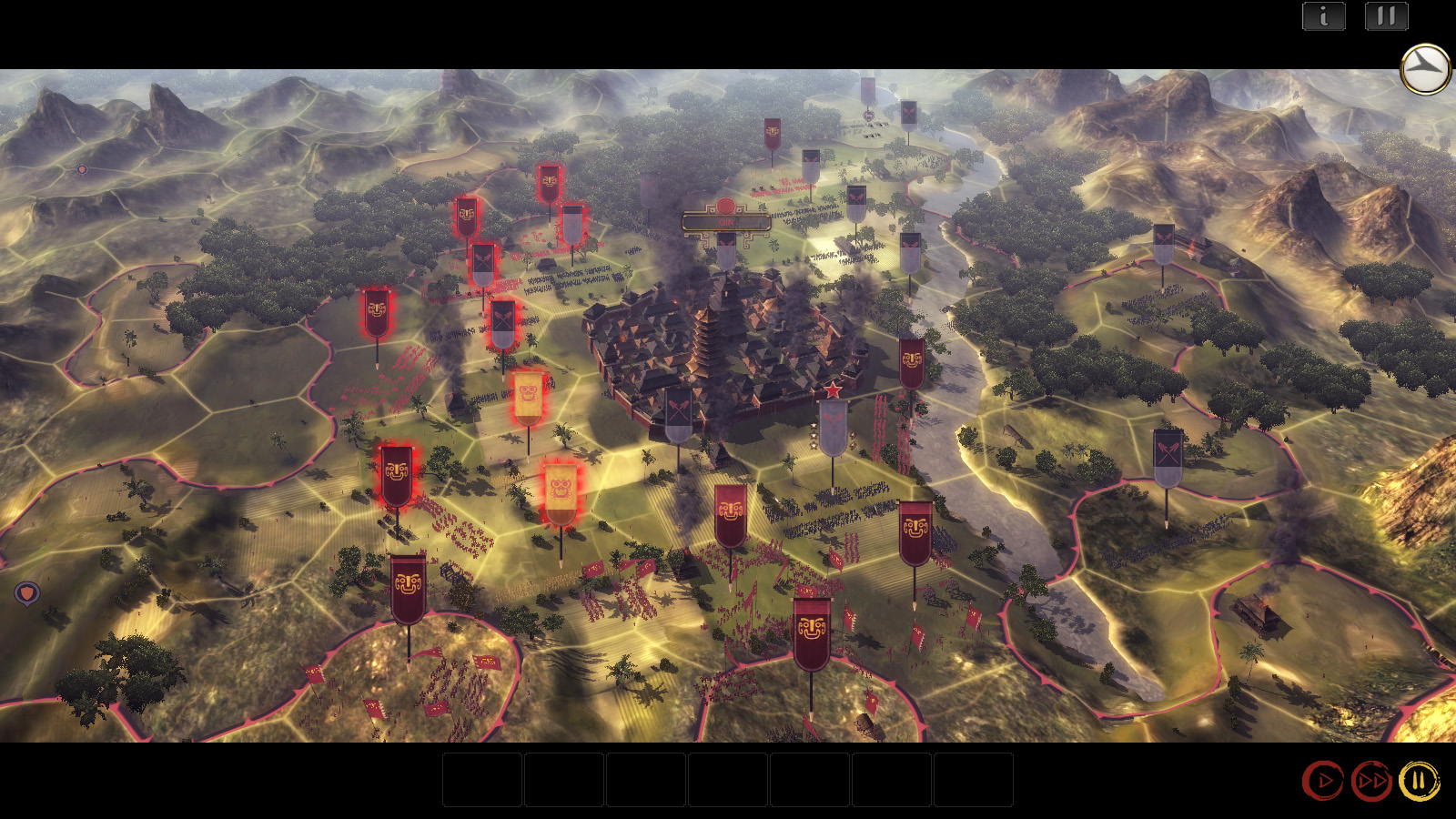
Oriental Empires is an upcoming 4X strategy game that will cover most of Chinese history, from 1500 BC to 1500 AD. My interest piqued, I conducted an email Q&A with developer Bob Smith. Read on:
1. Hello, and welcome to the site! Please tell us a bit about yourselves.
Development of Oriental Empires is being led by R.T. Smith and John Carline, two veteran strategy game developers with more than 30 years’ experience between them. Previously they worked together on the Total War series of games, in roles including Project Director and Lead Artist, and have credits on many other AAA titles from studios including Crystal Dynamics, Pandemic, Frontier Developments, and Slightly Mad Studios.
2. Your best-known previous work was Total War. What lessons have you learned from your experience with those games?
That you can’t please everyone, that you’ll never ship the perfect product, and that the bigger your team, the more features you’ll have that don’t quite join up.
3. At first glance, Oriental Empires looks like a cross between Civilization V, Endless Legend, and Romance of the Three Kingdoms XI. What are your influences and how have they shaped the game?
The initial inspiration was to create a civilization building game based on Eastern civilization, and having an interesting combat system. Superficially this is similar to Civ, but I don’t think the games feel alike to play. The battles obviously have some similarity to Total War games, but again, the resemblance is superficial as you don’t directly control them. History, reality, space 4X games, and miniature and board games are also influences.
Big week in strategy game news – CA has announced The Last Roman, the first add-on campaign for Total War: Attila. TLR will cover Justinian and Belisarius’ attempt to reconquer the West; here is the announcement video (complete with developer interviews) and here is Rob Zacny’s summary.
Meanwhile, a new round of Hearts of Iron IV previews is up; Three Moves Ahead has a detailed discussion; and quill18 has posted almost 30 minutes of gameplay footage. My take-aways are: (1) the current (alpha) build needs a lot more work; (2) beneath the glitches, there is a lot of potential; and (3) I’m glad the game has been postponed until 2016.
In other news:
In 1402, the Ming Emperor’s uncle usurped the throne.
The imperial palace burned.
According to one legend, the Emperor survived, and fled overseas; Zheng He’s fleets were dispatched to hunt him down.
What if the Emperor made it further than Zheng could have dreamed?
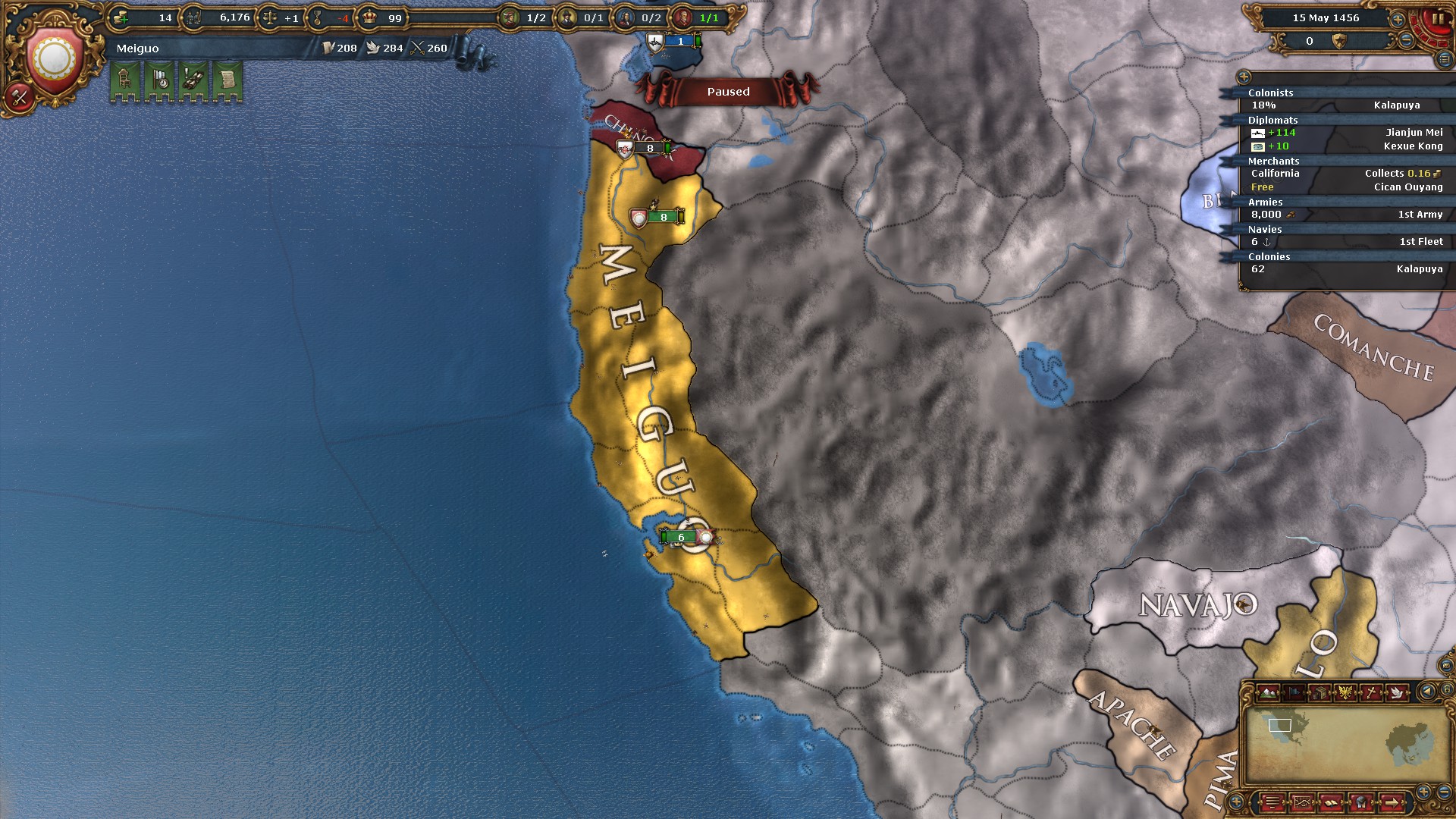
Hello, and welcome back to my coverage of Europa Universalis IV. Since I last wrote about EU4, it has received a further two expansions – El Dorado, which added a custom nation designer, and the newly released Common Sense. For my current game, I will play as Meiguo, a Chinese custom nation on the west coast of North America.
This is Meiguo in 1456, 12 years after the game began:
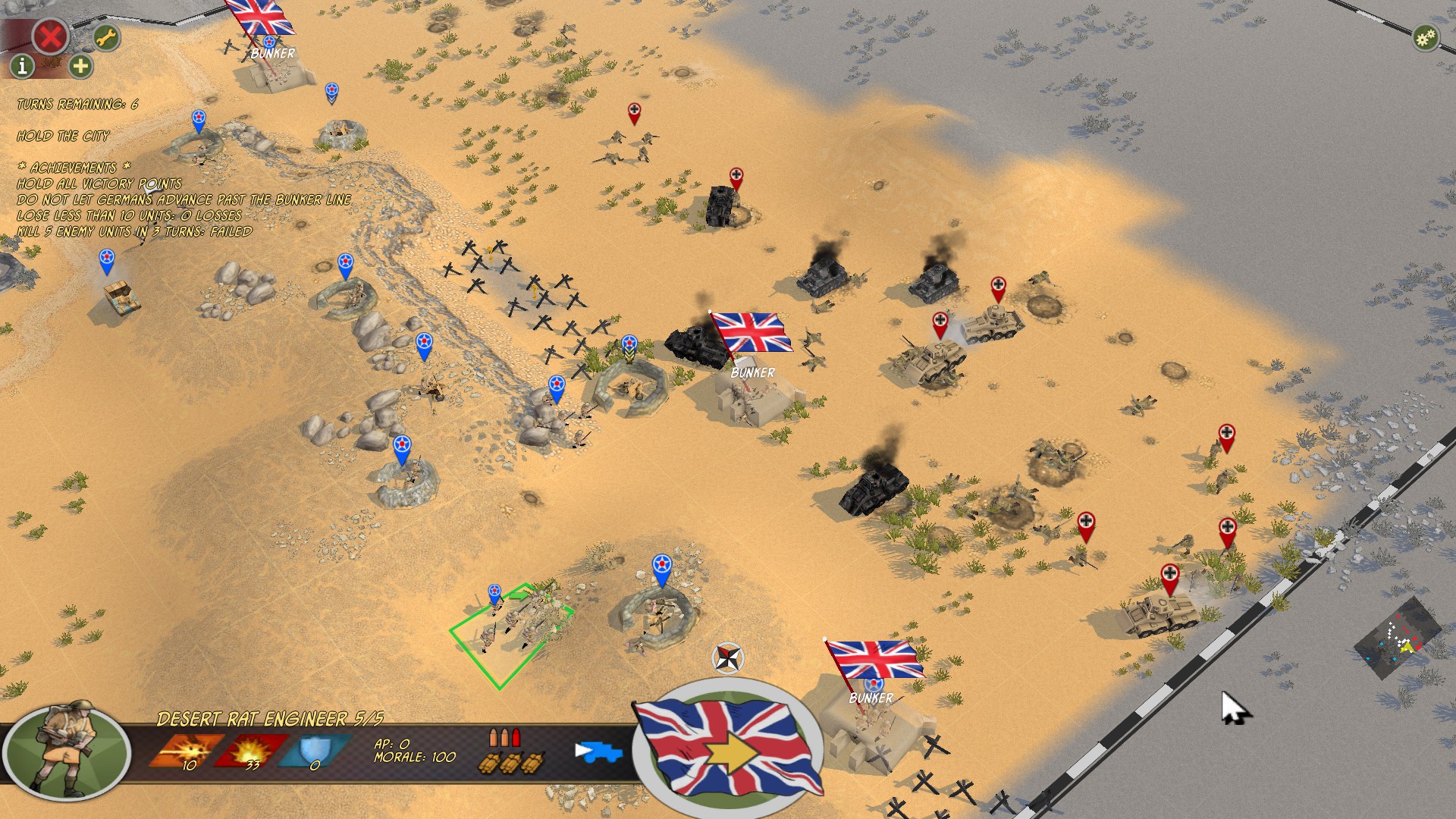
So far1, I’m impressed by Battle Academy, the 2010-vintage World War 2 TBS. The vibrant, comic-book aesthetic charmed me straight away, while the game mechanics present tactical concepts in a clear, elegant manner. Light tanks are zippy and thinly armoured, making them best suited for reconnaisance or mopping up. Infantry is horribly vulnerable in the open, and lethal when striking from ambush. Armour and artillery can suppress defenders, allowing friendly infantry to safely close in. Bunkers and concealed anti-tank guns are potent force multipliers – in the screenshot below, my entrenched Tommies gutted an Afrika Korps charge:
 Currently, the base game, which includes three campaigns (North Africa, Normandy, Ardennes) is available for $1 as part of the weekly Humble Bundle. For those interested, that price makes it a screaming buy.
The big news is 2K’s announcement of XCOM 2, due out for PC (and only PC) this November – IGN has the details. Highlights include randomised maps, secondary mission objectives (hopefully this will make missions a bit less grindy), various refinements to combat, and a novel premise – XCOM lost the war; Earth was overrun by aliens; and decades later, the remnants of XCOM are continuing the fight. I will most probably cover the game – although this time, I might turn the difficulty down!
Meanwhile, Paradox has announced a new Crusader Kings 2 expansion focused on Mongols, nomadic tribes, and the Silk Road; you can read the first dev diary here. From what I can see, reactions have divided into four categories: (1) “Woo! Mongols!”; (2) “Woo! Dothraki for mods!”; (3) worries that the larger map will lag the game; and (4) “Paradox should deepen/refine the existing mechanics instead of enlarging the game’s scope”. Personally, I loved the time I spent on the steppes in CK2, and I’d like to see how Paradox can build on that.
Speaking of Paradox, a press preview event is currently on for Hearts of Iron IV. The preview embargo lifts next week, so I’d expect to see articles and footage then.
Finally, at the time of writing, Bethesda is a few hours away from a Fallout-related announcement. Here is a 2010-vintage interview with the developers of Fallout: New Vegas, an excellent game that I still need to finish!
I’ve taken a break from European political/military history (Iron Kingdom, Frederick the Great: A Military History, Britain’s War Machine) to power through several fantasy books:
I’ve also started The Early Chinese Empires: Qin and Han, the first book of the Chinese history series whose Ming Dynasty entry I included in my recommended reading list. Very good so far… with one exception. Kindle readers be warned – the ebook edition is missing most of the illustrations! “To view this image, refer to the print version of this title,” it says – and had I known that, I’d just have bought the print version.
Last Christmas, I spent some very pleasurable hours in the shoes of Alexios Komnenos, Emperor of Byzantium, trying to rebuild my battered empire. This week’s song, added as part of the “Songs of Byzantium” DLC for Crusader Kings II, formed part of that experience. Enjoy!
Just as I associate post-apocalyptic video games with one franchise, Fallout, so I associate post-apocalyptic strategy with one game, Vic Davis’ Armageddon Empires. It’s an excellent game, whose design I dissected several few years ago. It’s also a unique game – both in the sense that it’s original, and in the sense that it’s the only “strategic level” post-apocalyptic game I can think of. Even adding a few strategy games that take place at smaller scales produces a very short list1.
In the last few weeks, I’ve dipped into a variety of games, without spending much time on any one: Assassin’s Creed 4; Shadow of Mordor; Counterspy; Order of Battle: Pacific; Kerbal Space Program; and Castlevania: Dracula X Chronicles.
Mostly, I like them. AC4 is as enjoyable as ever. Kerbal captures the wonder of spaceflight when I see the horizon before me, and the terror when I try to get my Kerbonauts back down. After a few hours, I’m comfortable calling it one of the best science fiction games I’ve played. Mordor, Counterspy, and Order of Battle: Pacific, so far, live up to their strong reviews and word of mouth. (Or, in one case, live down – I agree with the consensus that OOB: Pacific‘s naval battles are the weakest part of an otherwise strong game.)
Dracula X is the odd one out. I had never played a Castlevania game before, and I wanted to see what the fuss was about. Unfortunately, I think I started with the wrong one. I am not good at platformers… and this is a difficult platformer with limited continues. After beating my head against the first two levels, I am about ready to download a saved game that will unlock the other included Castlevania release, the well-regarded Symphony of the Night.
In this week’s news:
I love Endless Legend‘s soundtrack, and I love its imaginative, distinct factions. This week, I thought I’d bring them together. Below, I highlight one theme from each of the three factions that I’ve played (there are eight factions total, each with two themes). Enjoy!
Guns of Icarus Online is one of the most unique games I’ve played – a team-based dieselpunk airship game, in which rival crews try to shoot each other out of the sky. When it launched in 2012, it was strictly PvP. The following year, developer Muse Games launched a Kickstarter campaign to add PvE (“Adventure mode”), and it seems to be coming along nicely.
Read on for my follow-up email interview with Howard Tsao, CEO of Muse Games, about Adventure mode:
Peter Sahui: Hello, and welcome to the site!
When I last spoke to Muse Games in 2013, you were running a Kickstarter campaign for “Adventure mode” — a large expansion pack that would add PvE and co-op to the game. How is that coming along?
Howard Tsao: It’s been a long journey, with the scope of the expansion arguably larger than the original game, but we’re constantly making progress. Right now, in addition to iterating on some of the game modes and honing AI director as well as AI enemy movement and behaviour, we’re also doing work on player, faction, and world progressions. A lot of the in mission or in match feedback and progression are being designed and worked on as well. We’re creating factional airships, boss ships, and wardrobe as well, and we’ll soon move into designing more maps and game modes as well.
This week’s biggest news item is a movie – Mad Max: Fury Road is out, to rave reviews. It deserves them. Fury Road is what Mad Max movies should be. It’s what Mad Max movies can be, given a reported US$150M budget. It’s thrilling, visually spectacular (sometimes downright beautiful), and features a tough, capable female lead – I can sum it up in one phrase: “Holy @*&%, that was cool!” If the upcoming Mad Max game can live up to the movie, it will be a blast.
In other news:
Have I got a treat for you this week! The music of Tropico 4 is fantastic, both in its own right, and as a way to bring the setting to life. Enjoy – and check out artist Alex Torres’ other work. I’m listening to his catalogue on Spotify as I type…
The two expansions to Age of Wonders 3 have brought new races, a new character class, and (together with patches), assorted features and balance tweaks. They have also addressed my single biggest complaint with the game: the victory conditions (and their effect on pacing).
At launch, there was one way to win AoW3: destroy all opponents. This made the endgame a slog. Now, there are several other options:
I wanted to go into a bit more detail on this week’s books – Night Soldiers, by Alan Furst (novel) and The Grace of Kings, by Ken Liu (novel).
Night Soldiers is billed as a spy novel. I say ‘billed as’ because it’s really a collection of vignettes, loosely linked by the 1930s-1940s world of espionage. Here, a Bulgarian lad comes of age as a trainee spy in Moscow, amidst the terror of Stalin’s purges. There, a lethargic American joins the OSS, parachutes into occupied France, and discovers his talent for sabotage. It’s a vivid, immersive read – although as with the novels of Patrick O’Brian, the emphasis is on atmosphere rather than plot, so it may not be to everyone’s taste. If you’re interested in the era, give the sample chapter a look.
The Grace of Kings is a much-hyped epic fantasy inspired by Chinese history. It’s interesting, both for its setting and its style. It also tells a pretty good yarn!
Grace of Kings is the story of two men, Kuni the trickster and Mata the warrior, as they rise to power. Their adventures are, essentially, a fantasy retelling of the fall of the Qin Dynasty and the rise of the Han. (Seriously, knowing a bit about the period was enough to let me guess where the plot would go. I even guessed how specific incidents would unfold.) The Chinese influence extends beyond the setting – the mythic tone, the occasionally detached prose, and the willingness to tell rather than show remind me of the pre-modern literary conventions of Three Kingdoms. My main complaint is that one or two character actions felt contrived, seemingly so as to stick to “history”. Overall, a recommended read for fans of epic fantasy novels and grand strategy games (and maybe even Konami’s Suikoden RPGs).
Finally, I read Terry Pratchett’s Maskerade (novel) – his parody of The Phantom of the Opera. Decent, amusing, with some pointed comments on superficial beauty. Recommended for Discworld fans.
That is my initial impression of Oriental Empires (press release here), a newly announced 4X game that will be set in China between 1500 BC and 1500 AD. The bullet points and especially the screenshots remind me of Endless Legend/Civilization V meets Romance of the Three Kingdoms XI – it looks like all combat takes place on a hex-based strategic map, rather than being divided between a tactical and a strategic layer. The developers, R. T. Smith and John Carline, do have experience – both men have previously worked on the Total War series, with Smith’s experience stretching all the way back to the original Shogun. With the game scheduled for Early Access in ‘summer 2015’ (northern summer, I assume), the finished product is still some ways off.
Personally, I think the idea has potential. I’m always up for a novel setting, and China is badly underused in (Western) games. I’m trying to line up an interview with the developers, and will report back with any findings.
Tactics Ogre might just have my single favourite soundtrack of any game. This week, I present the hero’s theme, appropriately heroic. Enjoy!
I cannot believe that in almost three years of Musical Mondays (how time flies), I have never presented this song. It’s the first battle theme heard in Final Fantasy Tactics – arguably it’s the signature battle theme of FFT. Unfortunately, there has never been an orchestrated or remastered version of the FFT soundtrack; the song below is what you would hear in the original Playstation or PSP game. Enjoy!
After 100 turns, I threw in the towel on my attempt to save the Western Roman Empire. The legions, and my treasury, had finally reached their limit. The barbarians never stopped flooding in, from the north, east, and the hitherto quiet south. City after city had gone up in flames. The Roman Empire was dying by a thousand cuts, and there was no more point in slogging on.
I had a great time.
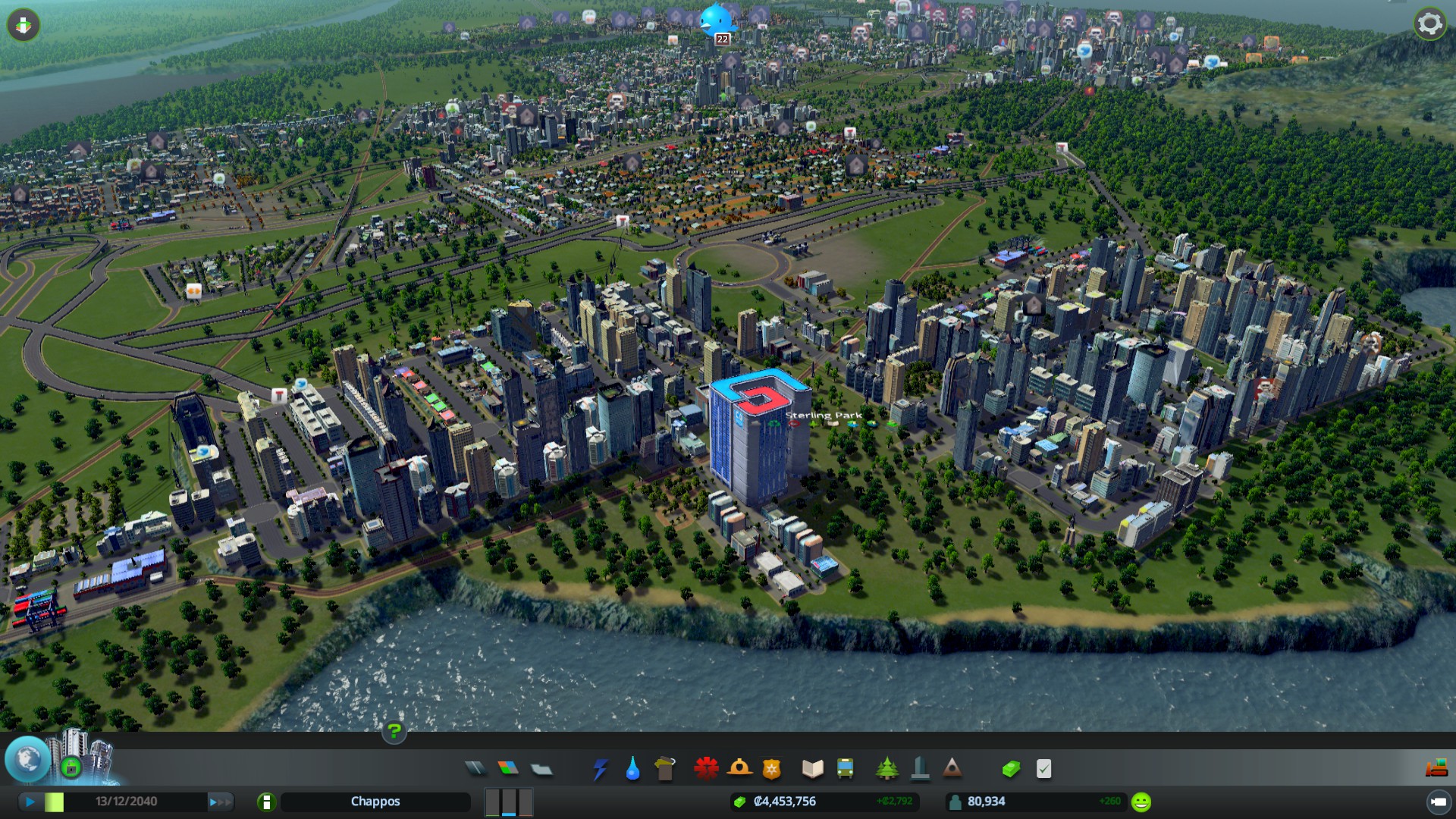
My first city made as much sense as a noodle-bowl.
At one point, I went nuts building high-rise apartments without ensuring adequate road access. The result was a mess. Commuters clogged the roads. Fire engines, delivery vans, garbage trucks, and even hearses couldn’t get in. Burnt-out buildings, rubbish and dead bodies accumulated. I had to demolish much of that district and build it all over again.
I learned my lesson. Sterling Park, my new high-density district, would be a marvel of urban design. Before the first resident moved in, I ensured all my infrastructure was laid out. New subway lines connected Sterling Park to the rest of my city (and let residents move from one end of the district to the other). Parks and gardens provided green space. A new freight train ensured that the shops could receive goods. I even built a new university campus — my existing one was all the way at the far end of the map. The towers went up. The citizens moved in — and loved it. The land value shot up. I was delighted.