First off, a big piece of news: my novella is out! Francois He and the River of Spices is my fantasy tribute to historical adventure fiction, set in a world of gunpowder, motor cars, and magitech war machines. It currently has a 4-star rating on Goodreads and is available in paperback and eBook.
You can check out the novella on your Amazon site of choice (US, UK, Canada, Australia, and all others). For Kindle Unlimited members, you can read this included in your subscription.
Gaming update below:

A MAGITECH FANTASY NOVELLA
Francois He is a war hero who never wants to pick up a gun again. Civilian life, building marvels with the power of Fog, suits him fine.
So when the distant republic of Platinea offers him a job, Francois jumps at it. Introduce Fog technology, collect his fees, and enjoy the seafood. Easiest money he’ll make in his life.
But he’s barely digested dinner when rebels storm the capital. And the desperate Platineans draft the most seasoned commander they can find: him.
From the grimy docks of the capital to a command barge on the River of Spices, from the salons of the palace to a war camp in the highlands, Francois must turn a mob into an army, deploy Fog on a budget, and outwit a charismatic warlord who really, really loves his job.
FOR FANS OF GEORGE MACDONALD FRASER’S FLASHMAN, LOIS MCMASTER BUJOLD’S VORKOSIGAN, AND DJANGO WEXLER
New releases
In non-strategy news, 007: First Light, a James Bond game from the developers of the Hitman series, is out to excellent reviews (Metacritic 87, Opencritic 88). I’ve never played a Hitman game, but I am very interested in the IP on this one…
Notable updates
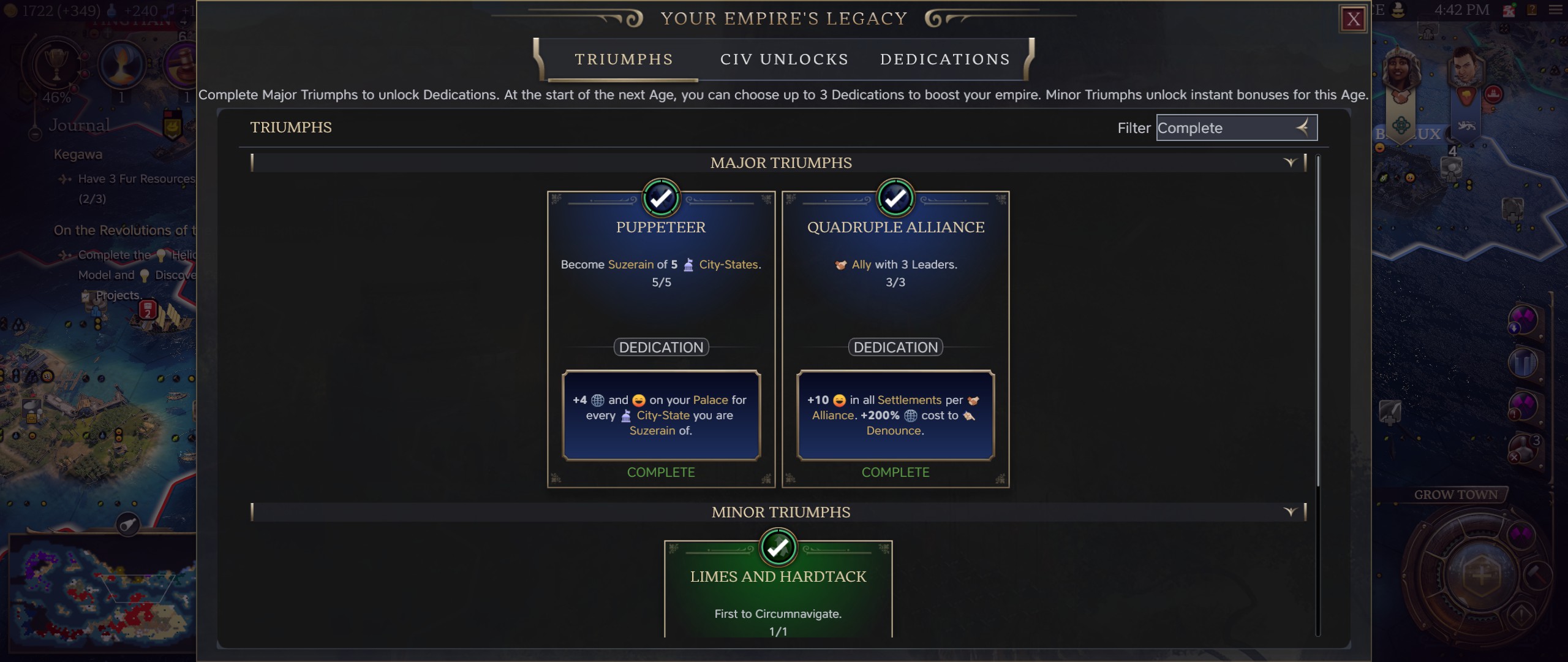
Civilization VII, one of my favourite games of last year despite its rough edges, received a major update (“Test of Time”). This overhauls the UI, allows players to stay as one Civ for the entire game (with new syncretism mechanics), and reworks the victory conditions and the legacy paths (mini-goals in each era).
I’m halfway through a new game and am enjoying it quite a bit — I’ve kept switching Civs, but the more freeform era goals (“Triumphs”) are a better fit for my play style than the rigid legacy paths (for example, playing as the diplomatically-focused Himiko, I usually beeline “befriend X city-states” or “form Y alliances” – see screenshot above), and the new UI is cleaner and better suited to PC screens.
What I’ve been playing: Terra Invicta, Anno 117, board games, and more
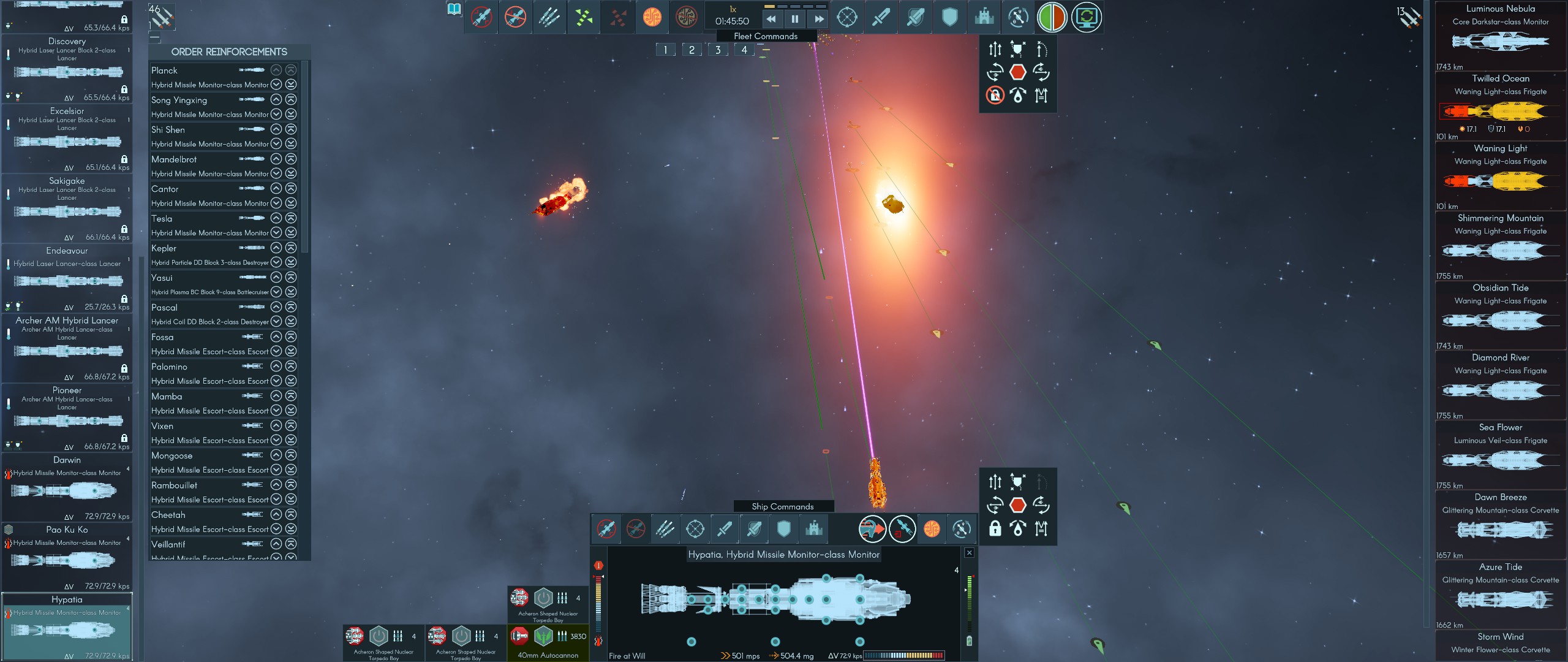
I resumed my Terra Invicta 1.0 campaign (from back in January), in which, knock on wood, I think I’m finally turning the corner on a vicious, Sisyphean struggle. This is my fault: I am playing the game’s hardest faction, the Academy — idealists who start off hoping to coexist with the aliens, and realise that peace must be negotiated at the point of a gun instead — on Veteran (hard) difficulty. And I am very, very rusty after not having played in nearly 18 months.
The results feel like the Dwarf Fortress “FUN” meme: digital blood and tears have flowed aplenty, I’ve been repeatedly blasted out of the Inner Planets and had to take multiple frustration-induced breaks from the game, and on several occasions I’ve been tempted to restart or reload to decades earlier. But when I finally managed to fuel my war machine with the resources of Fortress Pluto and win a heroic victory in Earth orbit against a larger alien fleet — which I hope will take some of the pressure off my beleaguered armies on Earth — there are few sweeter tastes in gaming. This would make an amazing science fiction story…
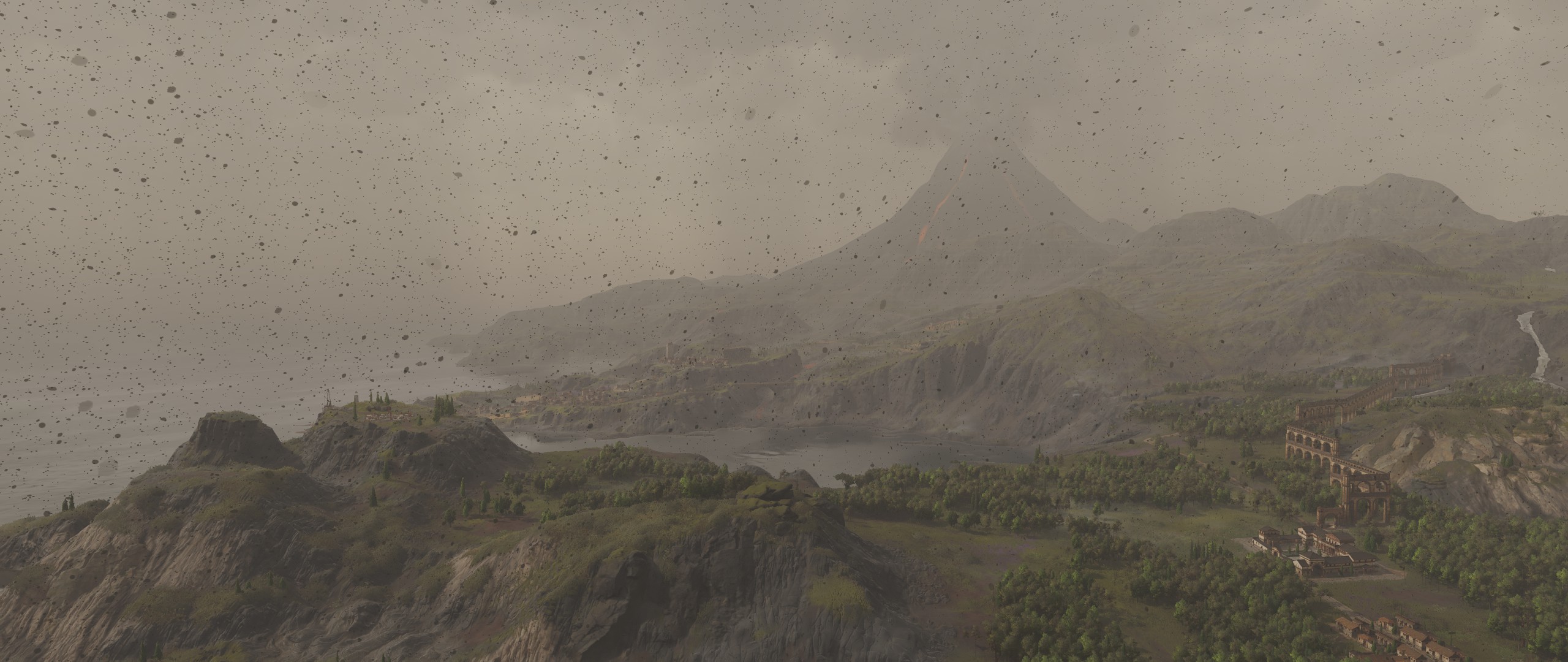
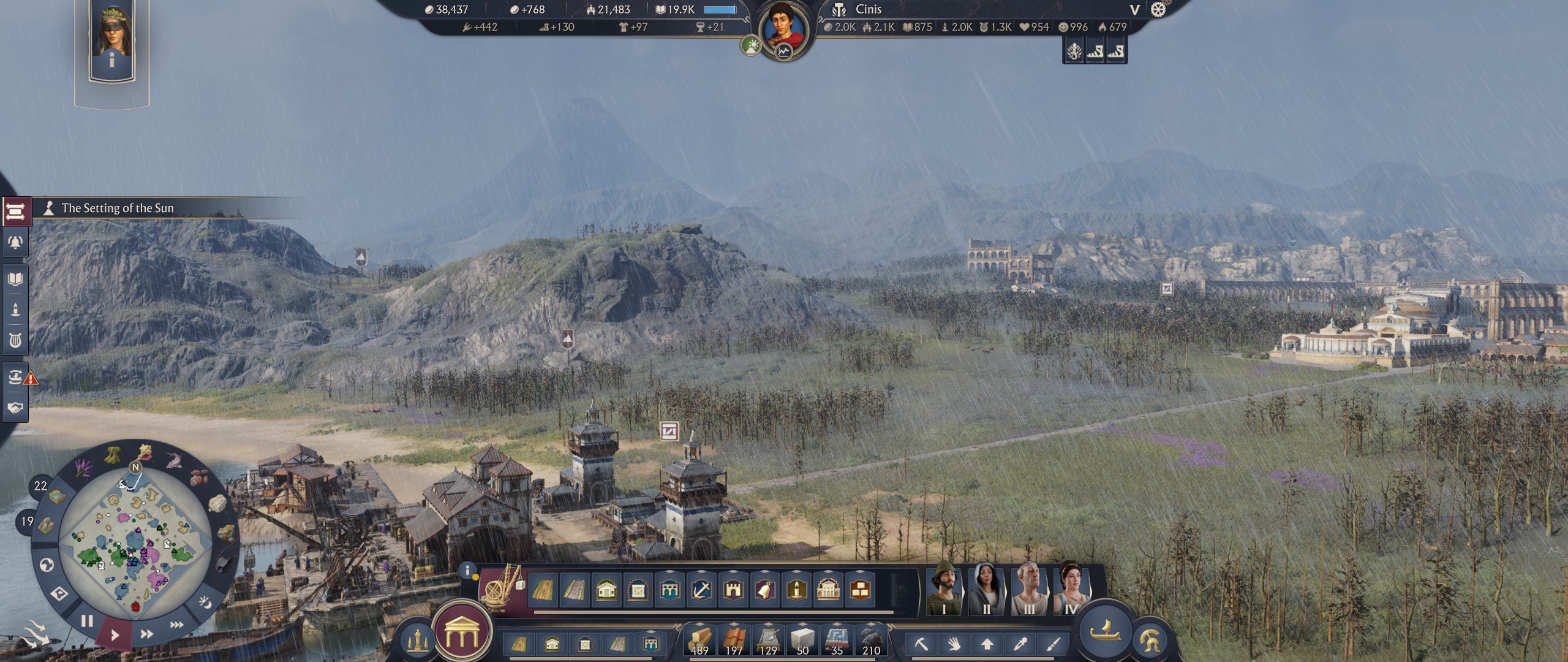
Meanwhile, I played enough of the new Anno 117 DLC to settle the vast new island it adds to the game — and see the newly added volcano in action. It is spectacular. Following the quest line triggered the volcano’s first eruption, sparking fires across the province, increasing the risk of disease, and decreasing farm productivity (due to its ash cloud). At one point, an unscripted inferno broke out in my main city, starting a minigame where I sent in the legions to rescue citizens from their houses. After the crisis comes renewal: volcanic ash gives a bonus to soil fertility, while the eruption leaves valuable obsidian behind.
Continuing my digital board game adventures, in April I dusted off Through the Ages on Steam. This takes the theme of a historical 4X game (start at the dawn of history, gather resources, research new techs, and play until the Space Age) and compresses it into a short, engaging, but very tough Eurogame: don’t ask how long I had to play before I could beat the “Easy” computer player… I also picked up the digital adaptations of Everdell and the “Uprising” expansion for Dune: Imperium.
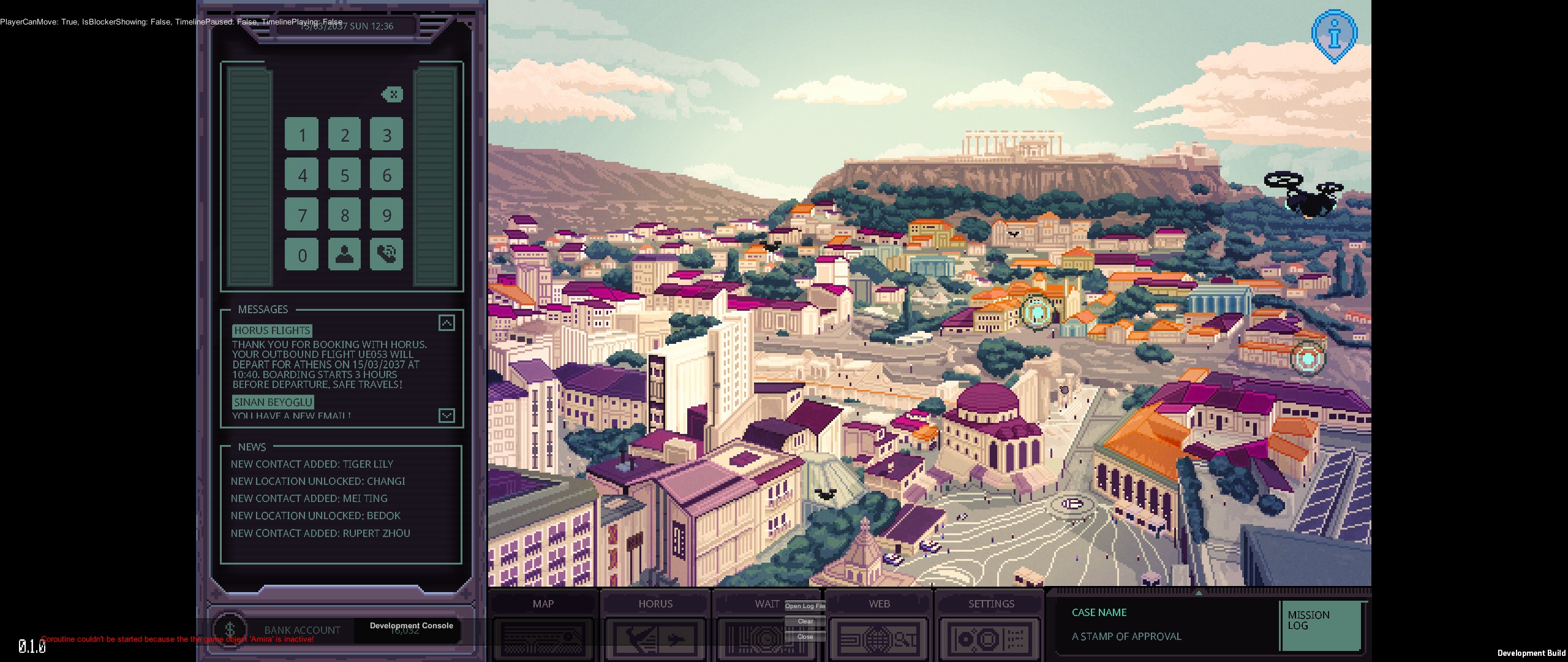
I poked at Chinatown Detective Agency, a cyberpunk game that piqued my interest as one of the very few titles set in Southeast Asia. The pixel art is gorgeous; unfortunately, the gameplay is mixed. The central conceit is interesting: a puzzle/adventure game where you have to Google for clues, or take out a pen and paper to solve memory puzzles. The execution is often aggravating: did it really add anything to make the player book flights in-game? Or to be unable to save anywhere during the first few cases? (And the beta patch that added save-anywhere was never finished, leaving debug logs all over my screen.)
Finally, I completed Pokopia — a worthy and very charming successor to Dragon Quest Builders 2 — and my first run of the “Empires of the Indus” Old World DLC. For now I have parked Machiavelli the Prince, as I found it less interesting once I reached the far edges of the map (China and Japan) and started repeating the same trade routes.


